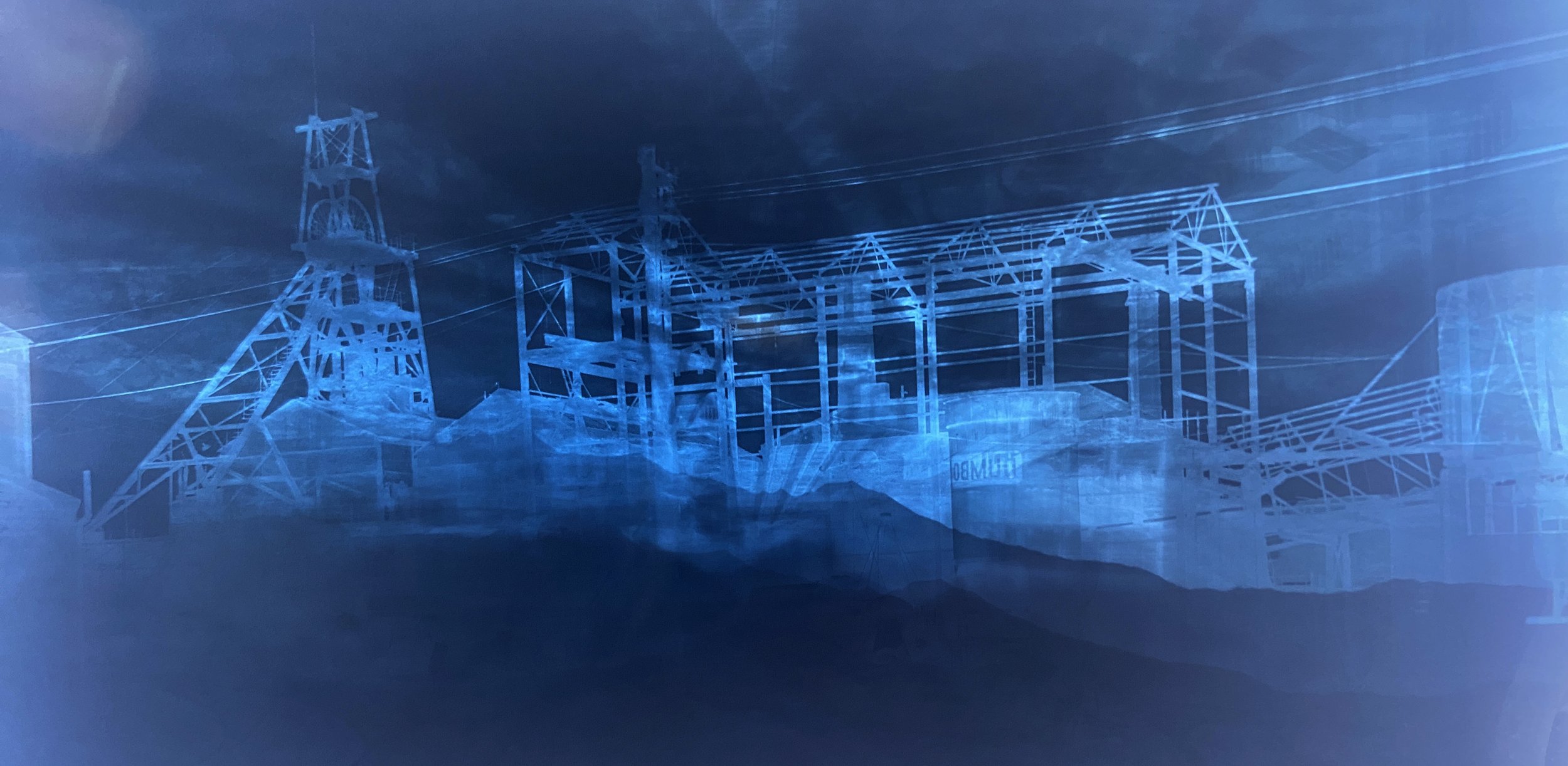
Traces
The stones I photograph carry industrial memory in their chemistry. They come from two neighbouring beaches on the Durham coast near Seaham. Blast Beach takes its name from the blast furnaces of the Victorian ironworks at Nose’s Point, whose slag was tipped over the cliffs into the sea. Just to the south, at Hawthorn Hive, the shore is scattered with waste from the Durham collieries, once tipped onto this coast by the million tonnes each year.
Between 1997 and 2002, the Turning the Tide project removed more than a million tonnes of spoil and restored the coastline, now designated Heritage Coast. Yet the industry has not gone. Fragments of slag and colliery waste remain among the pebbles, and pools of orange and yellow water still gather on the beach, stained by iron leaching from the old mine waste.
Up close, each fragment records a moment of change. Blue glass formed where molten slag cooled too quickly to crystallise, its bubbles holding gas frozen mid-escape. Shale from the coal seams carries pyrite, which breaks down in air and water into sulphuric acid and iron, staining the stones with the orange ochre known as “yellow boy.” Oxide films thinner than a soap bubble split light into purples and blues. Some stones are clearly made by industry, some are natural rock altered by it, and some are impossible to place.
Alongside the stones are images of wood: conifer bark sealed with white resin where it was wounded, and the silvered grain of a long-felled tree. They show the story at its beginning. Coal formed from forests that grew some 300 million years ago, their carbon buried and compressed over millions of years. Mining and burning it released that carbon in a couple of centuries, and left its wastes on the shore as new kinds of stone, made in decades rather than ages and now being reworked by the sea.
Industrial heritage is not only kept in museums and memories. It is written into the substance of the land, not as surface scars but as changes to the chemistry of the stone itself.
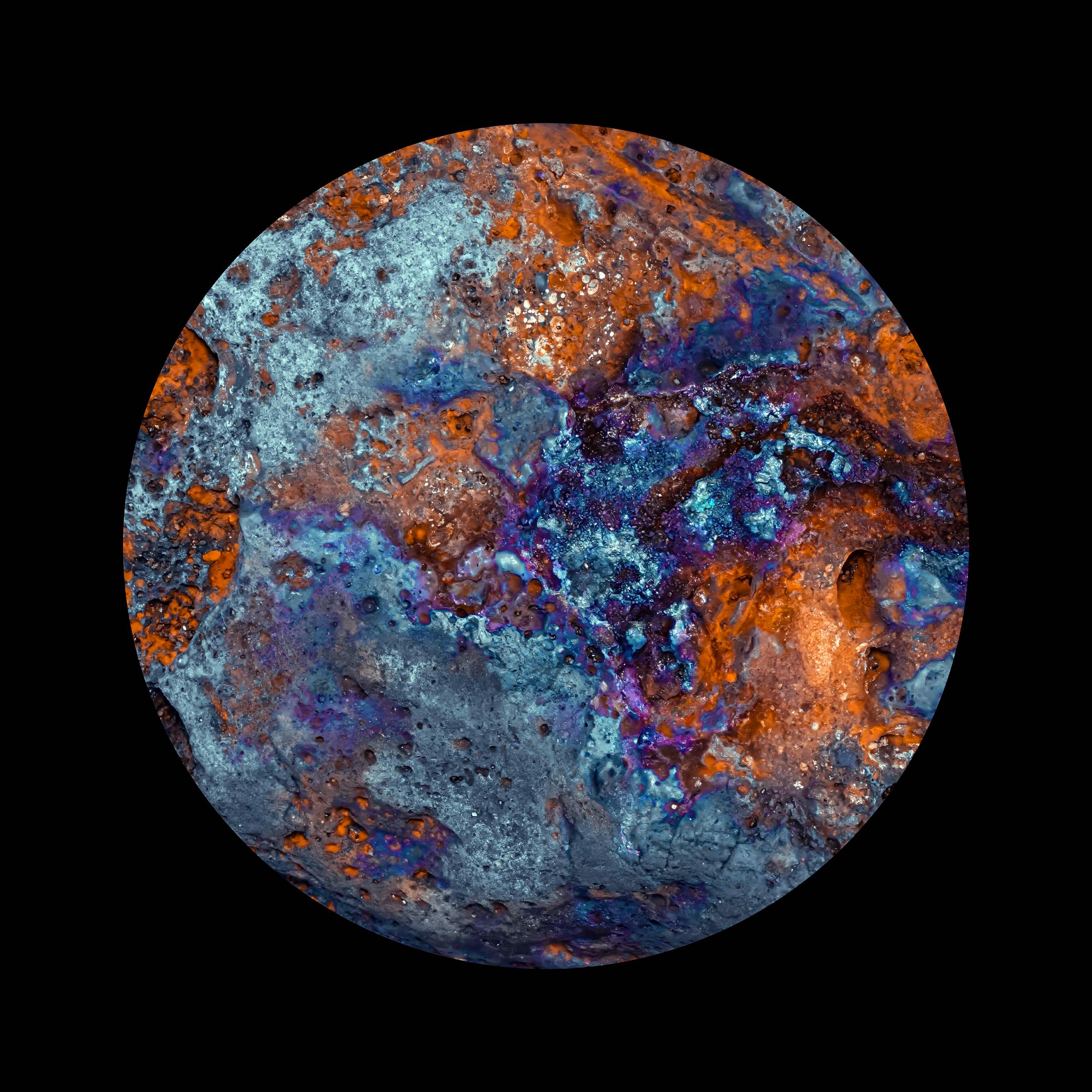
This slag from Blast Beach has a skin of iron oxide only a few hundred nanometres thick. It holds no blue or purple pigment. The colours come from light reflecting within that thin film, like oil on water. Blast Beach, Seaham, Co.Durham, 2023
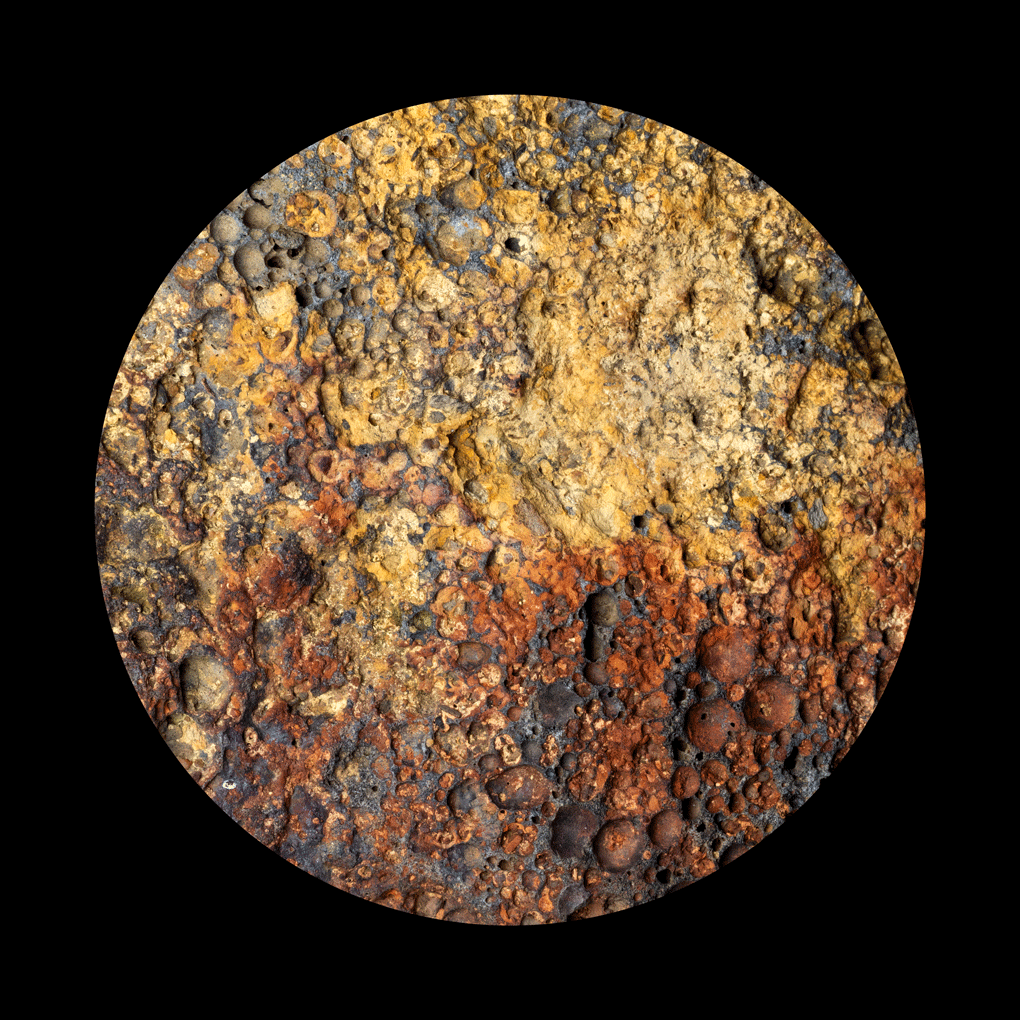
Bubbles frozen in furnace slag, now crusted with rust and ochre as iron and acid mine water keep reworking this shore. A hundred and fifty years on, the chemistry is still going. Hawthron Hive, Easington, Co.Durham, 2023

The blue is glass, formed when molten slag from the Victorian ironworks at Nose’s Point was tipped into the sea. The orange is iron oxyhydroxide, or “yellow boy,” left by water draining through the region’s old coal workings. Two industries meet on one surface: the fire of the furnace and the slow chemistry of the mine. Hawthorn Hive, Easington, Co.Durham, 2023
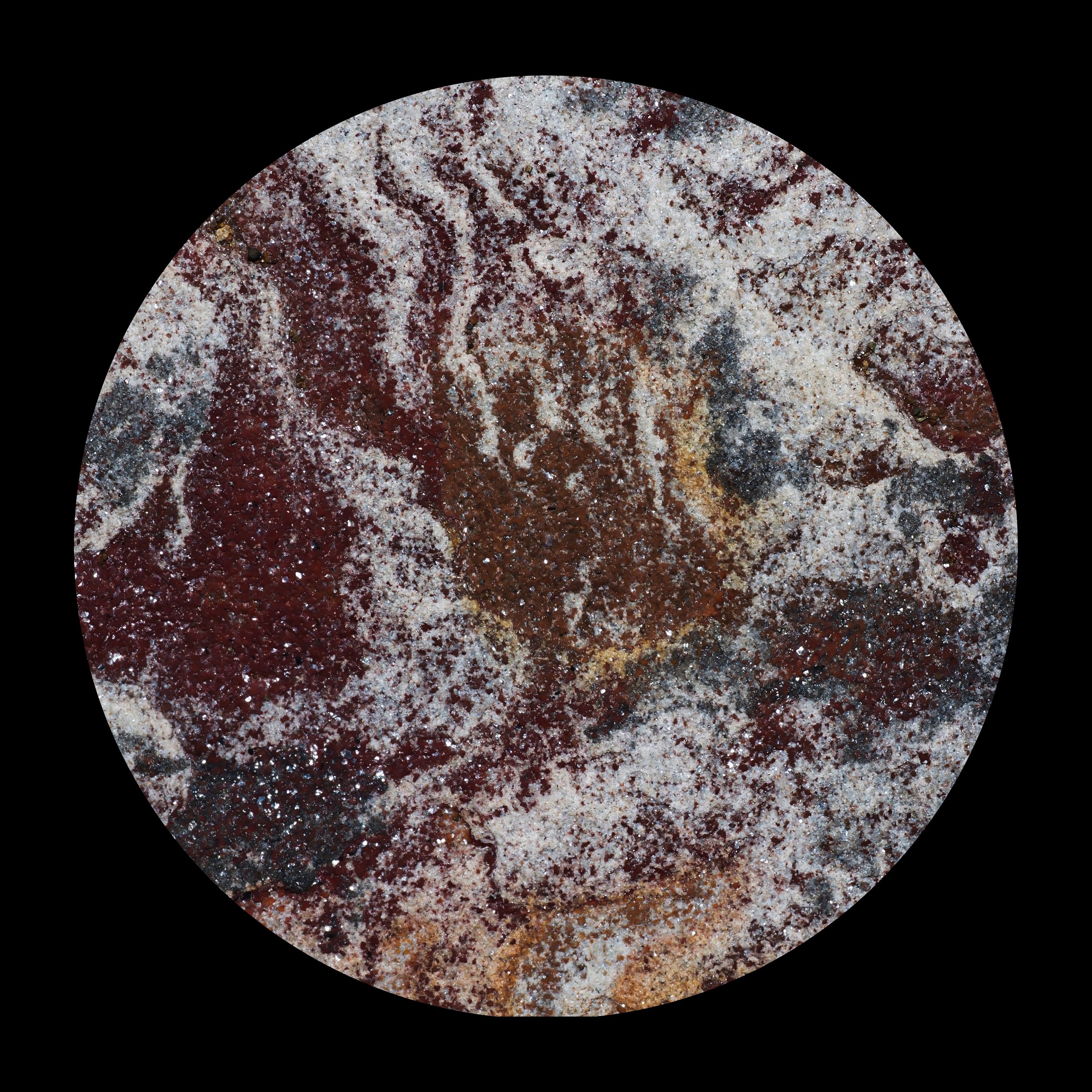
Grains of quartz glitter through red and ochre iron oxides in a stone from Blast Beach, Seaham. The swirling bands formed as iron-rich fluids moved through the rock and settled out in waves, a chemical tide line frozen in stone. The colour may be ancient, from the Permian desert that once baked this coast, or recent, from the fires of the colliery spoil heaps dumped on the shore. Either way, it’s iron that tells the story. Blast Beach, Easington, Co.Durham, 2023
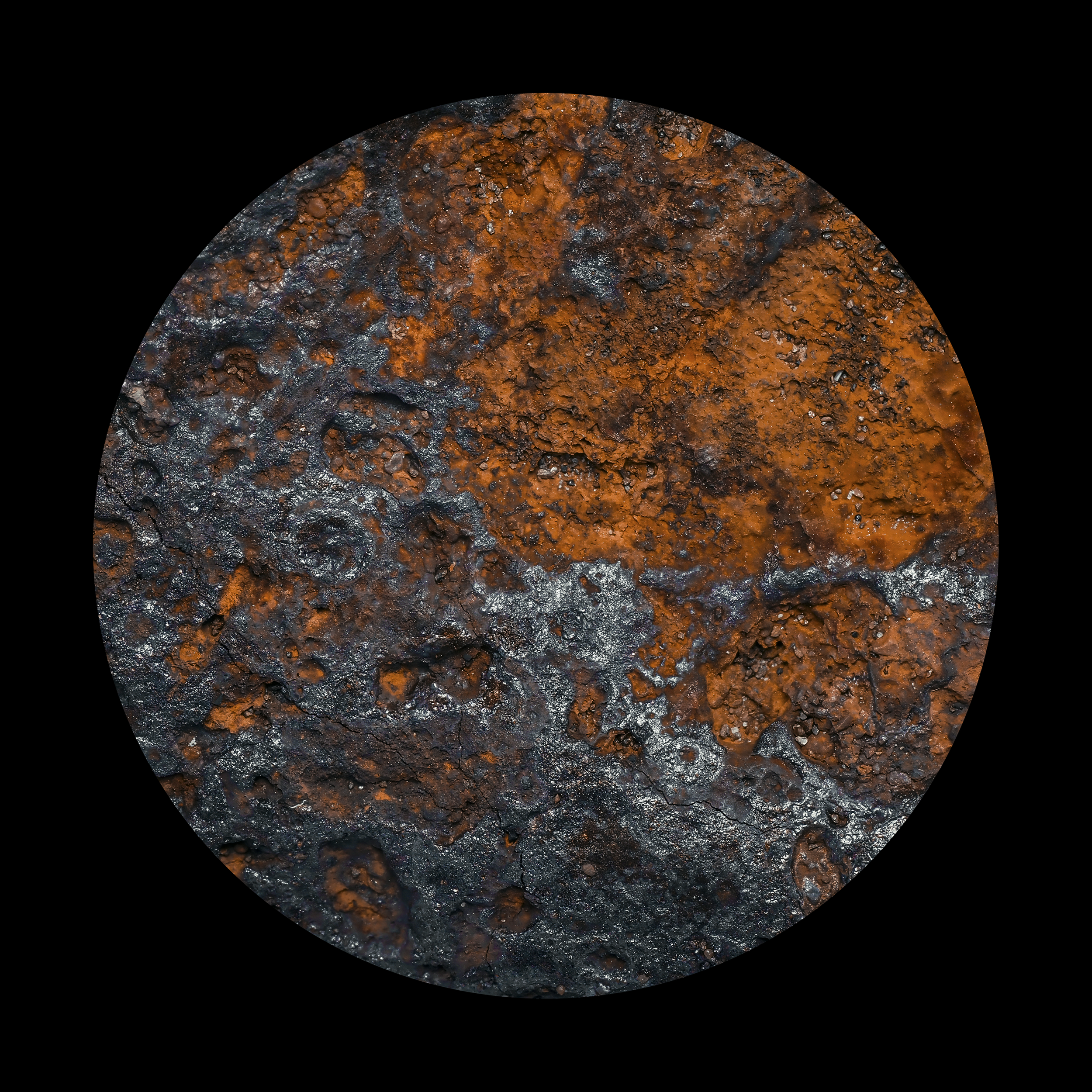
Iron-rich furnace waste, slowly rusting back toward the ore it came from. Hawthorn Hive, Easington, Co Durham, 2003
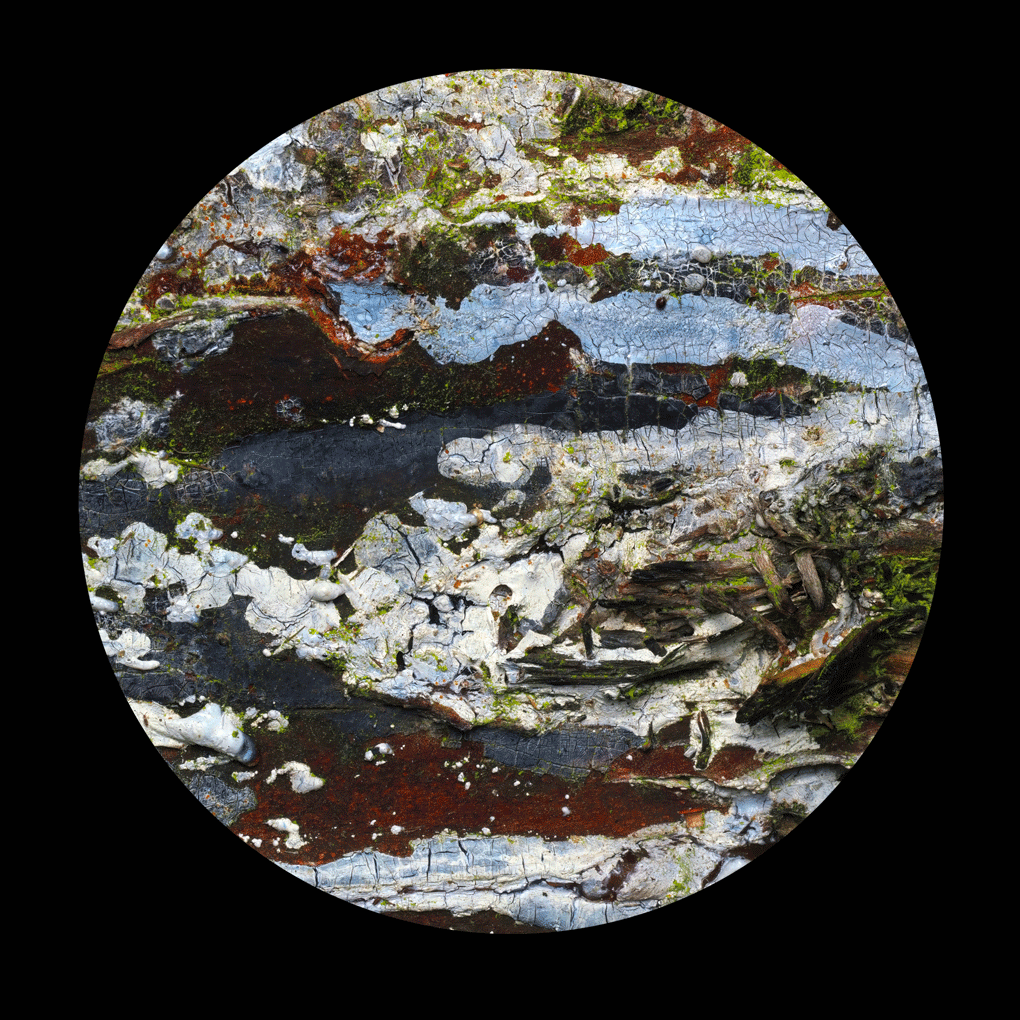
In this wound on a planted conifer, we witness both trauma and healing made visible. The tree’s response to injury has created an abstract landscape of resin flows and color transitions - amber, ochre, and deep burgundy bleeding into patterns that speak of both damage and recovery. This scar is a map of resilience, where crystallised sap forms topographies of healing. There’s profound irony here: these conifers, planted to quickly hide industrial scars, carry their own wounds and healing processes. Like the land itself, like the mining communities who worked it, these marks tell stories of both injury and survival. The tree’s slow repair, its patient laying down of resin barriers year after year, offers a different testimony about recovery - one that doesn’t hide its wounds but transforms them into something both protective and beautiful. This is how genuine healing often looks: not a complete erasure of what happened, but an honest incorporation of damage into new forms of being. Havannah Nature Reserve, Newcastle upon Tyne, 2024
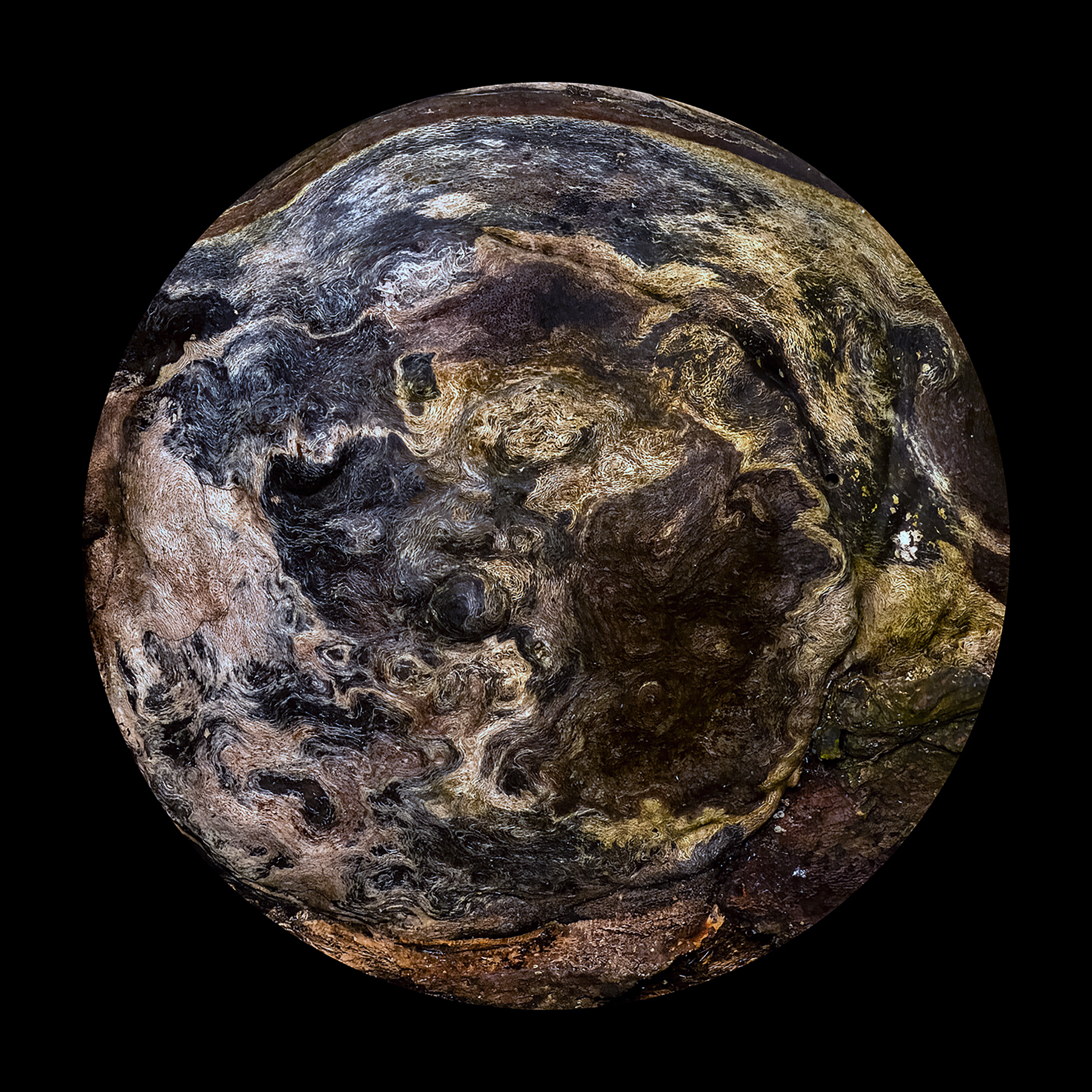
Years after felling, this tree’s wood has been bleached silver by sunlight and stained by fungi, revealing the twisting grain where it once grew around knots and branches. Decay draws its own map. Havannah Nature Reserve, Newcastle upon Tyne, 2024
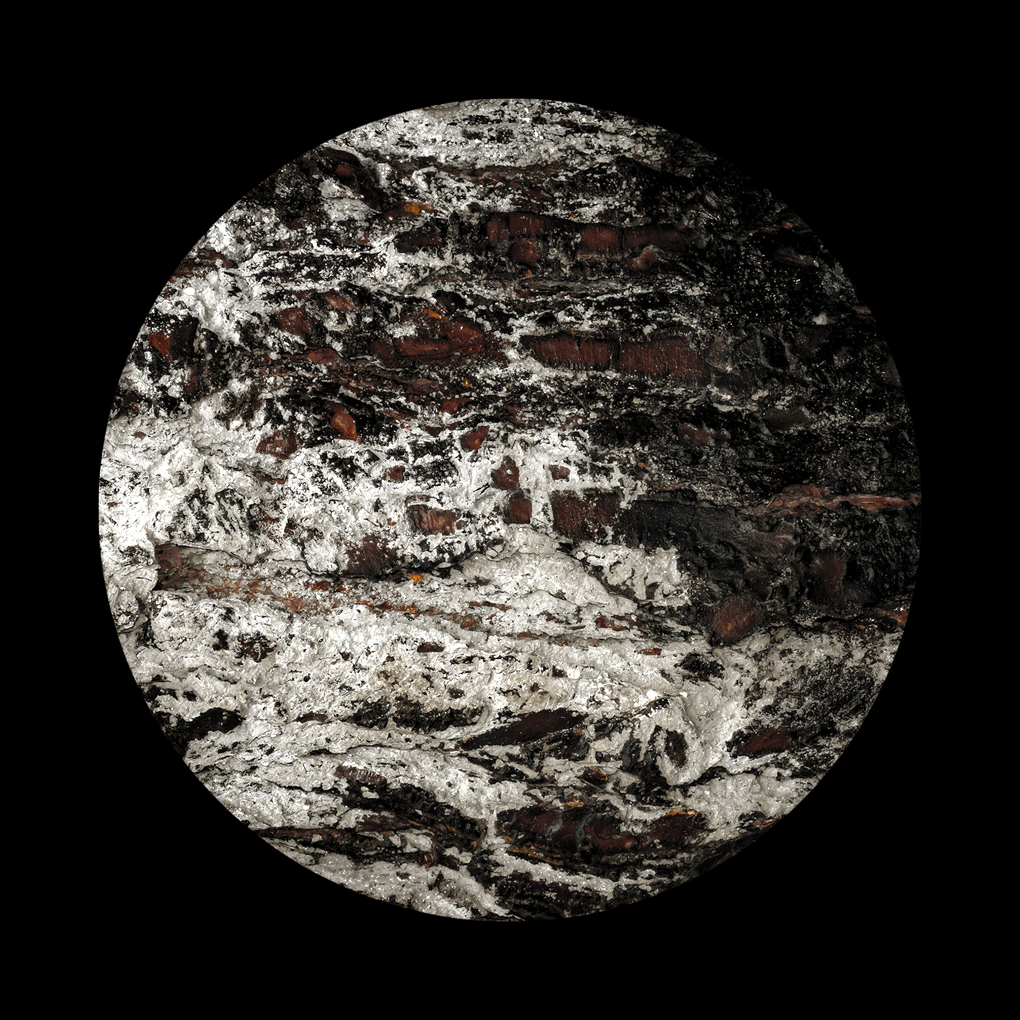
Conifer bark, its wounds sealed in white, crystallized resin. Wheatley Hill 'Pit' Pond, Co Durham, 2024
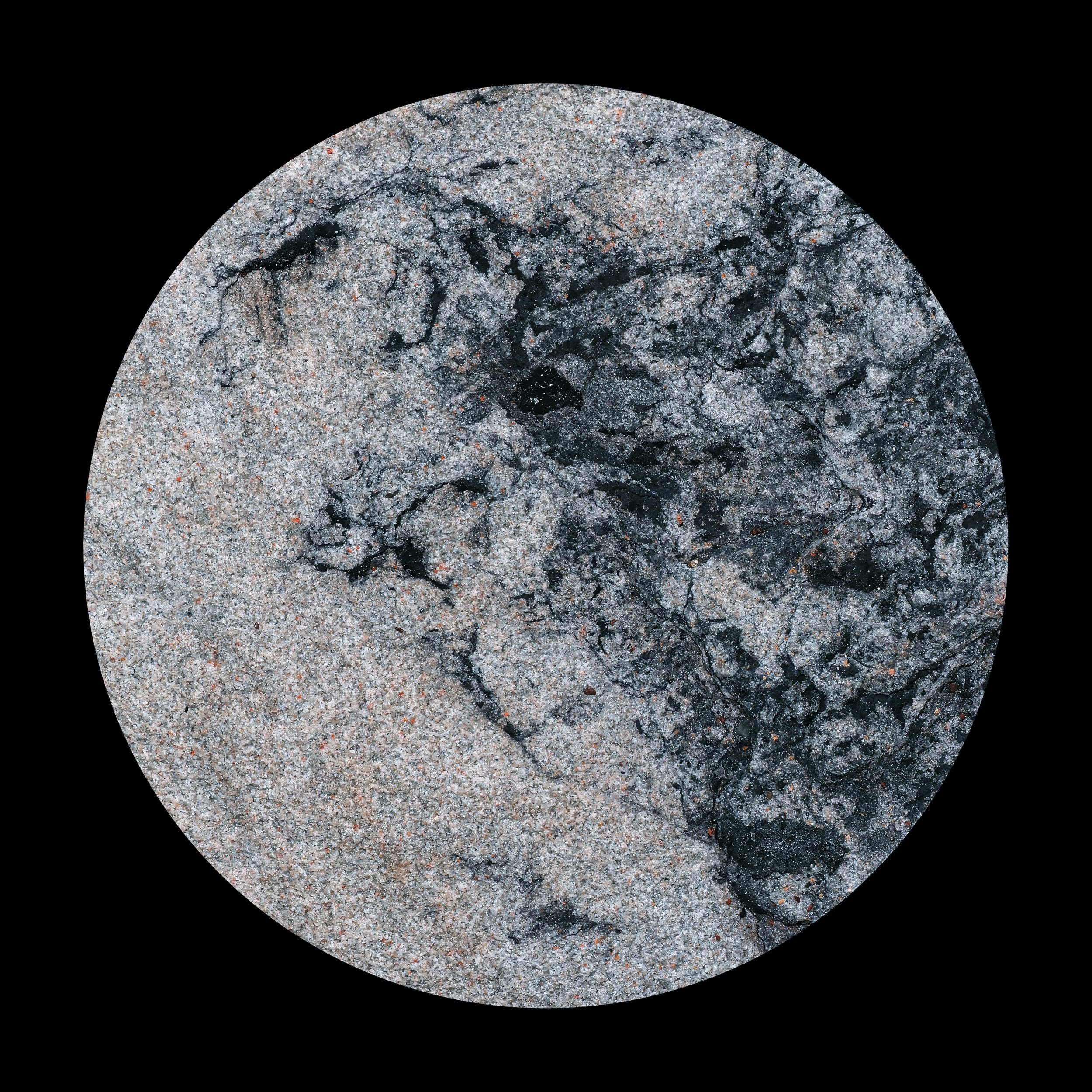
A close-up of stone from Blast Beach, Seaham, where colliery waste was once dumped onto the shore. The pale sandstone has been darkened by carbon from coal waste, worked into its pores and cracks by the tide, while tiny flecks of orange mark iron grains slowly rusting. The marks aren’t geological in the usual sense; they’re a record of what was poured onto this coast. Blast Berach, Seaham, Co Durham, 2023
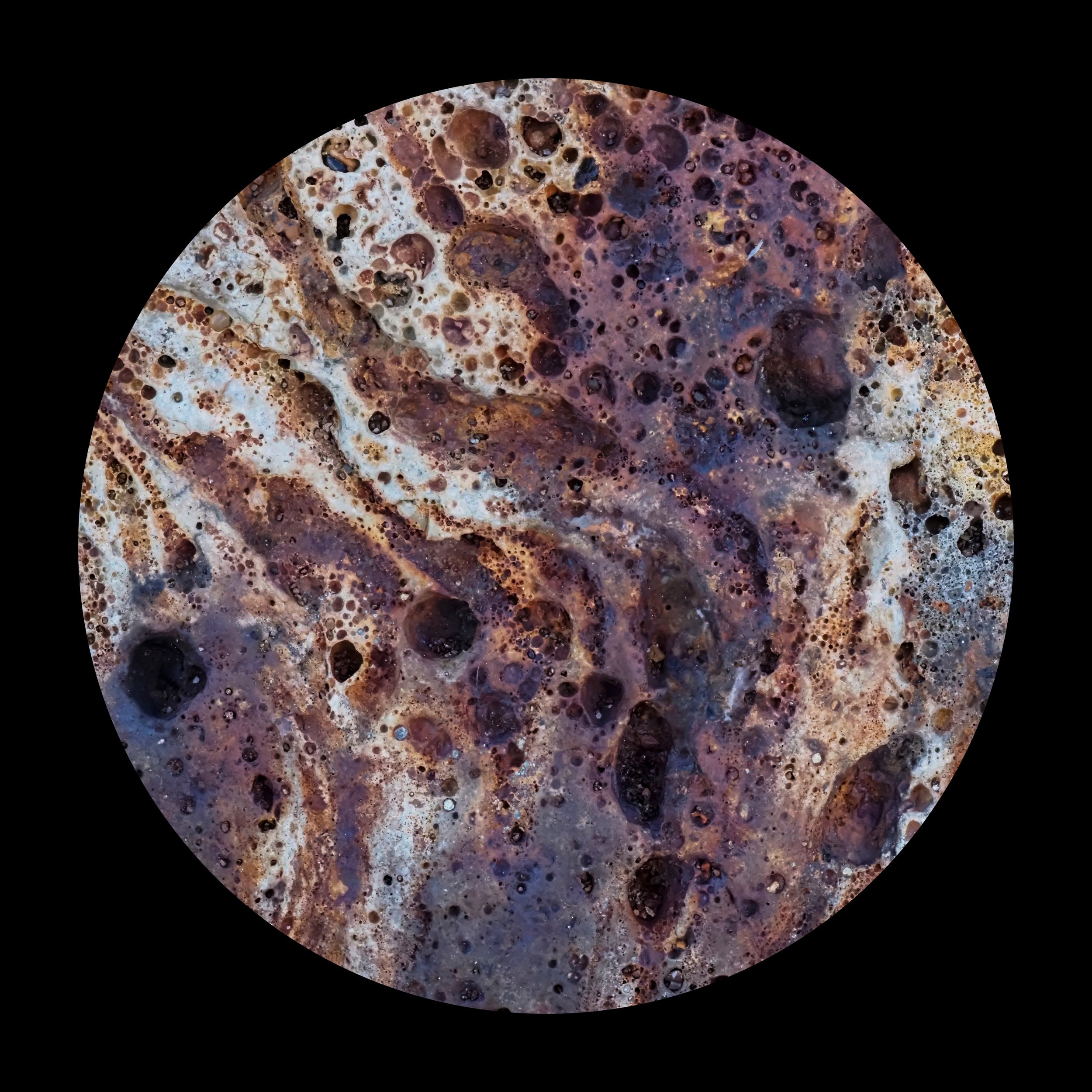
Stone or slag? Pitted and swirled, from a beach built of both Seaham, Co Durham, 2018
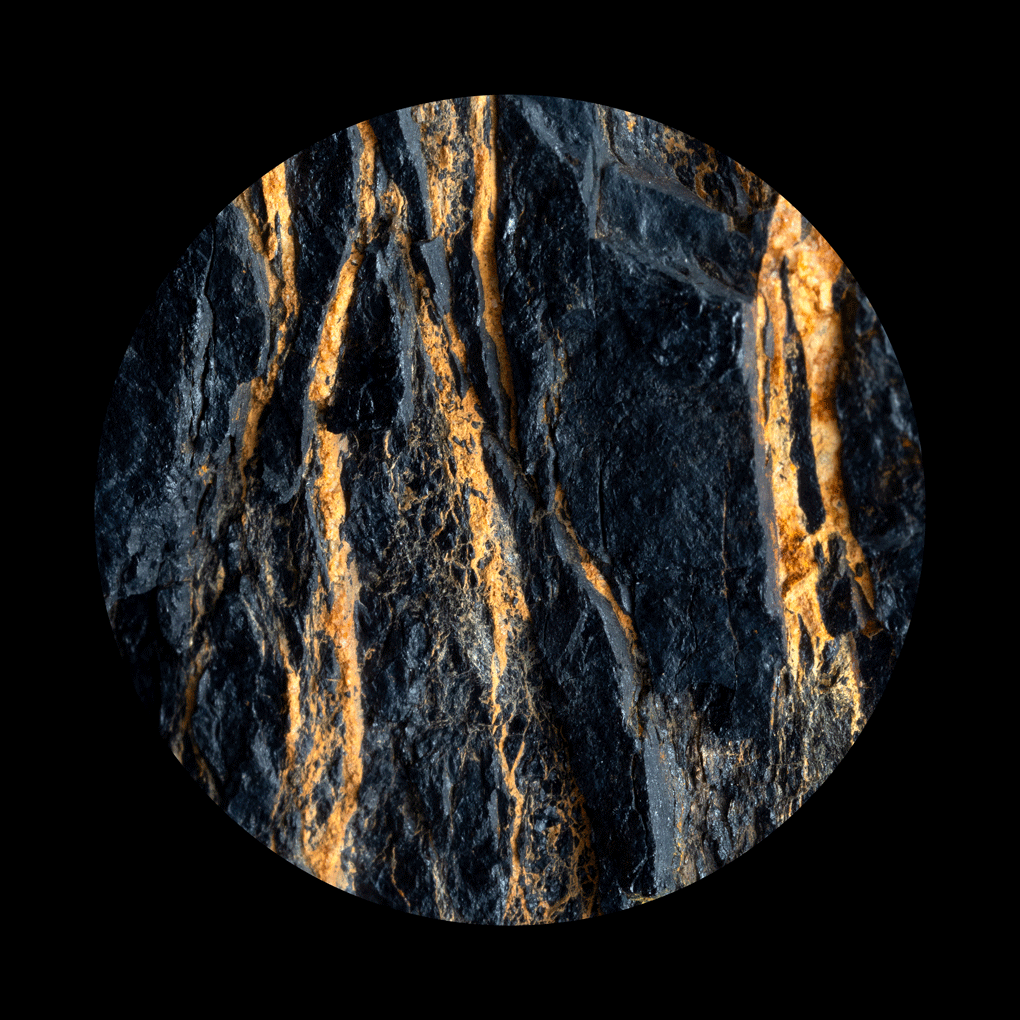
Dark, carbon-rich rock from the Durham coal seams, dumped on Blast Beach as colliery waste. Hidden pyrite in its layers reacts with air and water to form sulfuric acid and iron, which seeps out as orange ochre. This chemistry is the source of the ‘yellow boy’ that stains this coast. Blast Beach, Seaham, Co Durham, 2018
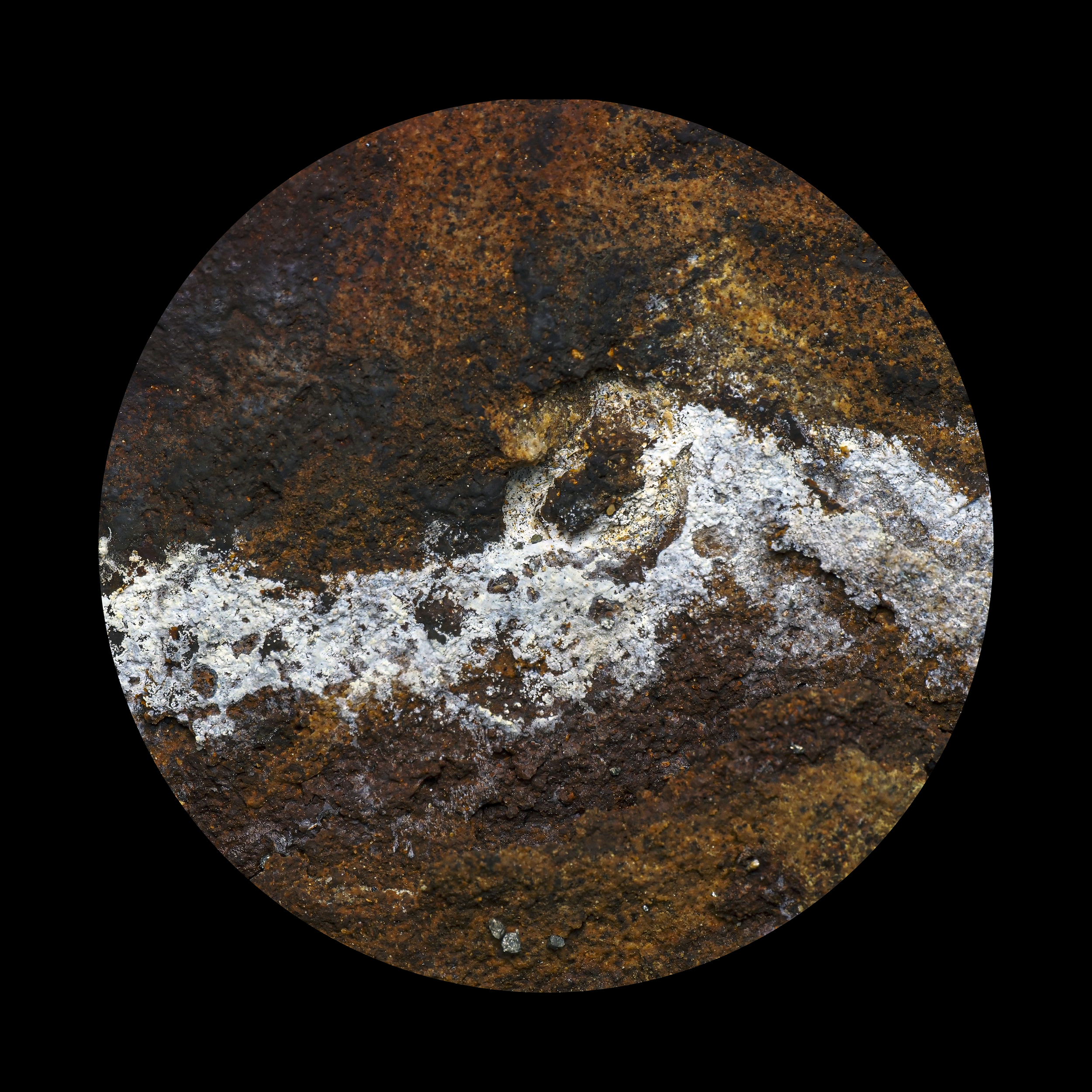
Iron-rich stone or slag, rusted dark, crossed by a band of white mineral crust. It may be gypsum, left where sulfate-laden mine water met calcium, or salt and shell from the sea. On Blast Beach, the industry and the tide write over each other. Blast Beach, Seaham, Co Durham, 2018