Wild Carrot (Daucus carota)

from £5.00

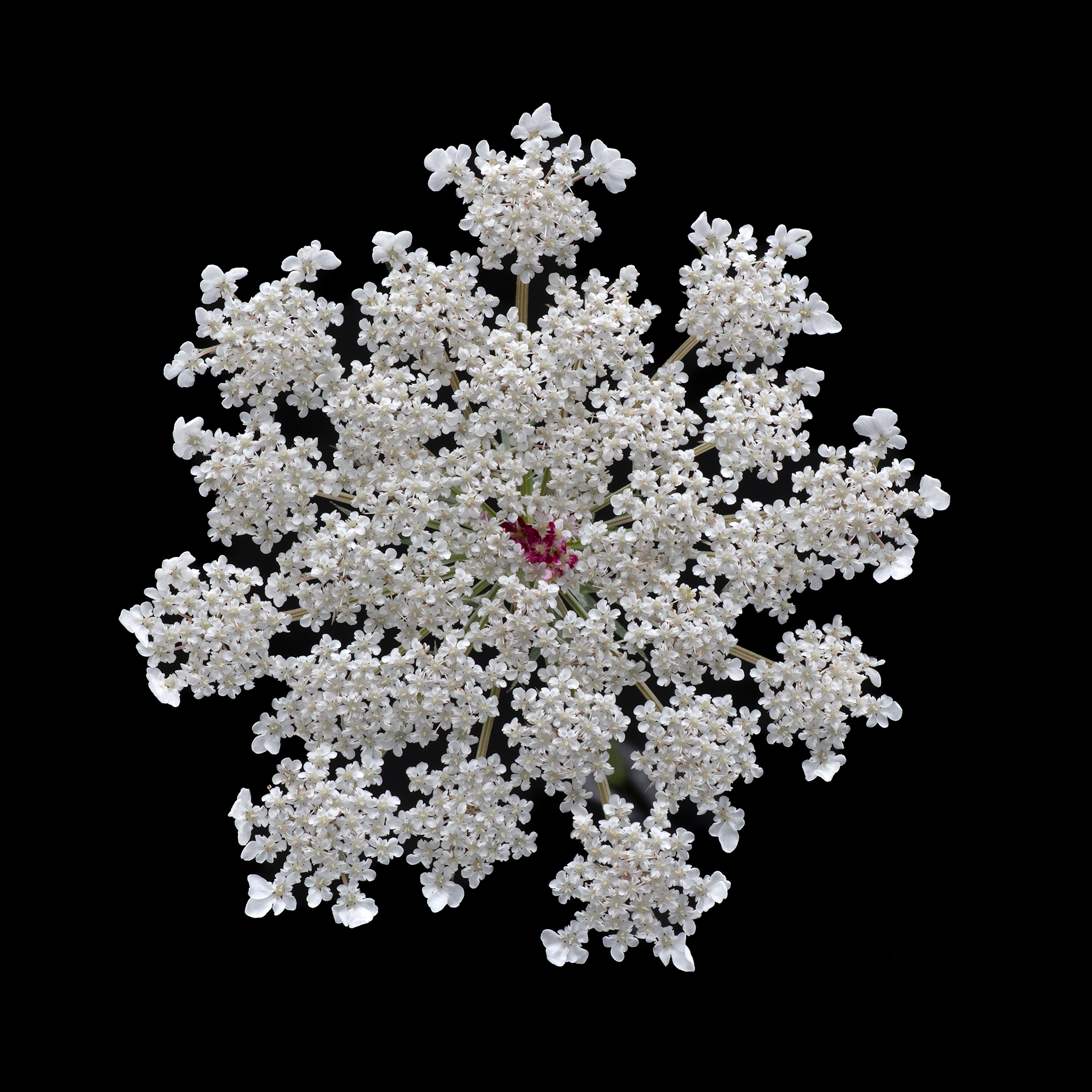
From June to September, wild carrot opens flat, lacy heads made of hundreds of tiny white flowers. At the centre there is often a single dark red floret. Its purpose is still debated: one idea is that it looks like a small insect and draws others in to feed. As the seeds ripen, the head curls inwards into a cup, often called a bird's nest.

Its open flowers make nectar easy to reach, so they are visited by a wide range of insects, including hoverflies, beetles, bees and wasps. It thrives on dry, sunny, well-drained ground, such as chalk and limestone grassland, verges and old spoil, where thin soils keep taller plants at bay.

Wild carrot is the wild ancestor of the cultivated carrot, though its own root is thin, pale and woody. It also belongs to a family that includes deadly hemlock, so it is not recommended to pick and eat.

In North America and sometimes in Britain it is called Queen Anne's lace, from a legend that a queen pricked her finger while making lace, leaving a single drop of blood at the centre.

Size:

From June to September, wild carrot opens flat, lacy heads made of hundreds of tiny white flowers. At the centre there is often a single dark red floret. Its purpose is still debated: one idea is that it looks like a small insect and draws others in to feed. As the seeds ripen, the head curls inwards into a cup, often called a bird's nest.

Its open flowers make nectar easy to reach, so they are visited by a wide range of insects, including hoverflies, beetles, bees and wasps. It thrives on dry, sunny, well-drained ground, such as chalk and limestone grassland, verges and old spoil, where thin soils keep taller plants at bay.

Wild carrot is the wild ancestor of the cultivated carrot, though its own root is thin, pale and woody. It also belongs to a family that includes deadly hemlock, so it is not recommended to pick and eat.

In North America and sometimes in Britain it is called Queen Anne's lace, from a legend that a queen pricked her finger while making lace, leaving a single drop of blood at the centre.

CARDS

Each card is a small piece of the project: a way to keep, give or frame these stories of renewal and transformation. The images are printed with the same archival inks and paper as my larger prints and hand-mounted on white, acid-free 250gsm card.

  • Square: 13 × 13cm image on a 15 × 15cm (6 × 6") card

  • Rectangle: 12 × 8.5cm image on a 12.7 × 17.8cm (5 × 7") card

The image is on the front, the inside is blank for your message, and the caption is printed on the back. Envelopes included.

PRINTS

Available in three sizes:

  • Small: 25cm longest side

  • Medium: 35cm longest side

  • Large: 55cm longest side

Each print is made with Canon LUCIA PRO II pigment inks on Titanium Lustre Metallic paper, a 280gsm resin-coated paper with a silver base. The metallic finish gives the images a subtle shimmer that shifts as the light changes, and the pigment inks are archival, so the colours are made to last.