 Image 1 of 1
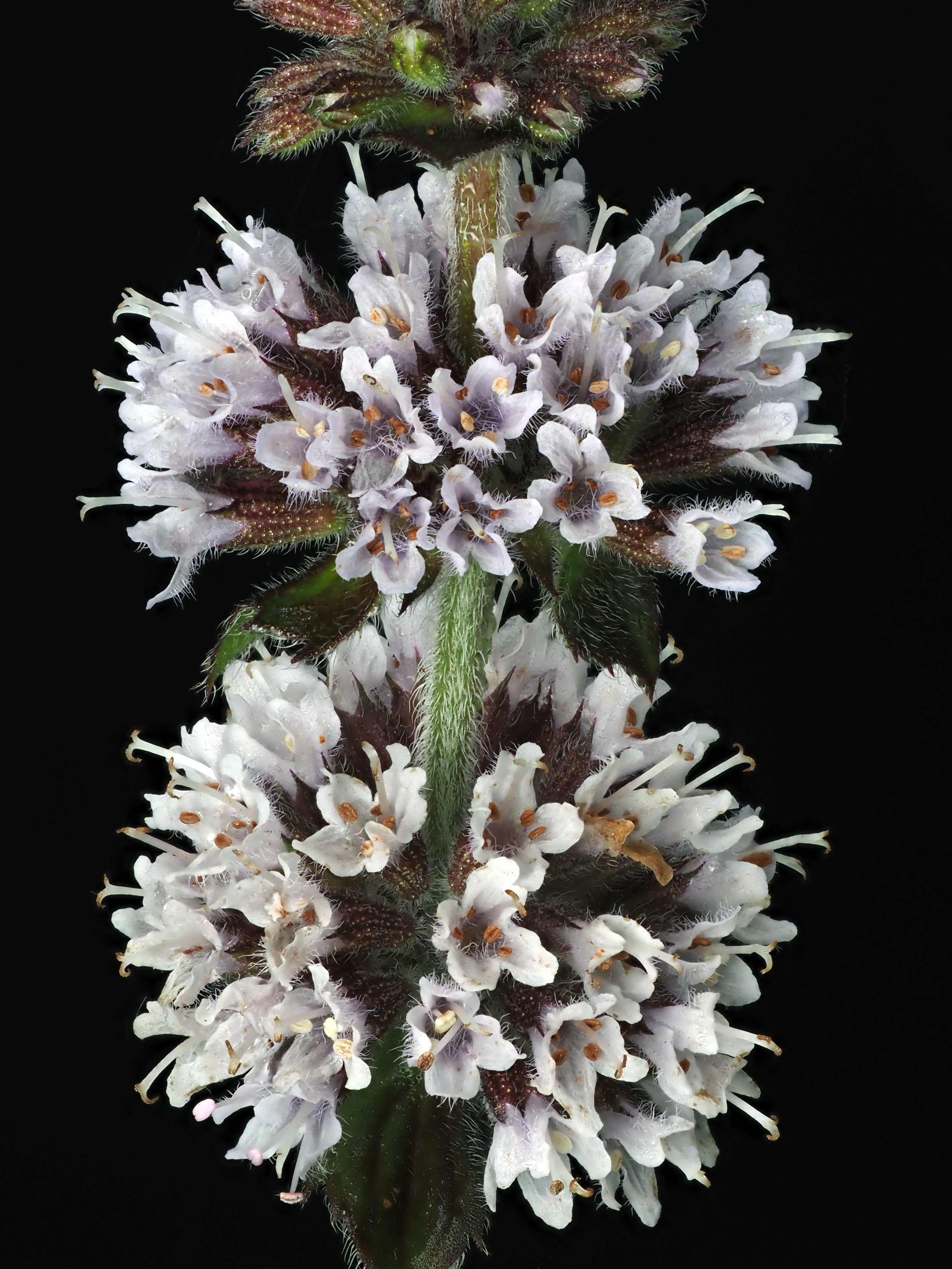
Water mint is a native perennial of wet ground, growing at the edges of ponds, streams, ditches and marshes. From July to October, its hairy, often purple-tinged stems carry dense, rounded heads of pale lilac flowers, with further rings of flowers below. The leaves give off a strong, peppery mint scent when brushed or crushed. Its flowers are visited by bees, butterflies and hoverflies.
On former colliery sites, it grows around subsidence pools and in waterlogged hollows, where it spreads by creeping underground stems and helps bind soft, wet margins alongside rushes, reeds and yellow iris.
Water mint is one of the parents of peppermint, which arose as a hybrid between water mint and spearmint. Its scent made it a favourite strewing herb, scattered on floors to freshen rooms, and it has long been used to flavour food and drinks.