 Image 1 of 1
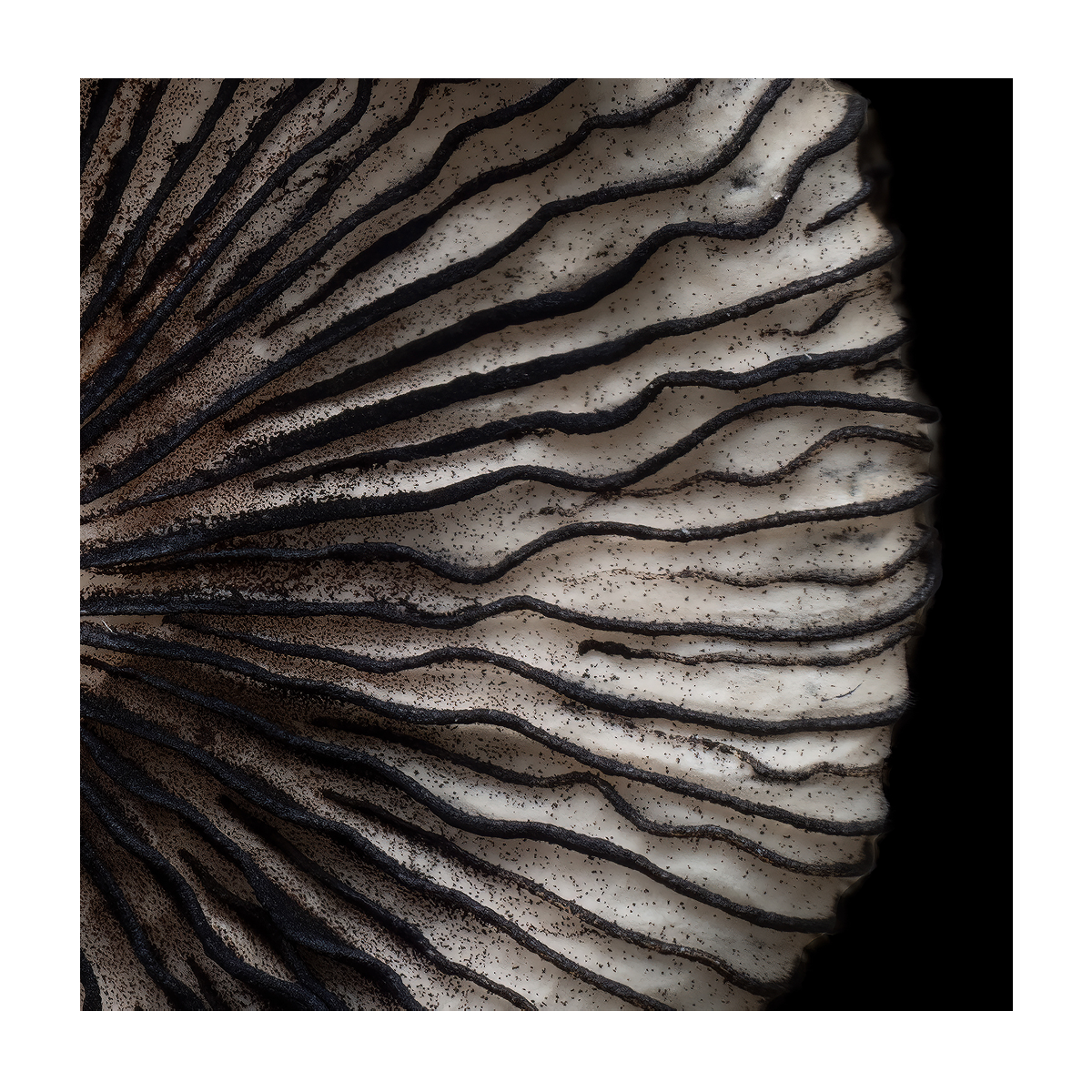
This small white mushroom, dusted with a mealy, snow-like coating, grows on dung, especially horse and cow droppings. Beneath the cap, crowded gills fall like the folds of a pleated skirt, darkening from white to black as the spores ripen. It appears overnight and lasts only a day or two before its cap deliquesces into black ink, releasing spores as it dissolves.
On restored colliery sites, horses ridden through the reserves leave dung that feeds a community of decomposers, from beetles and bacteria to fungi like this one, recycling nutrients into the food web.
Its larger relatives, such as the common ink cap, were once used to make writing ink, said to deter forgers because the spores in it could be seen under a microscope.
Coal formed where ancient swamp plants escaped decay. The snowy ink cap is part of the opposite story: decay returning life to ground once shaped by mining.