 Image 1 of 1
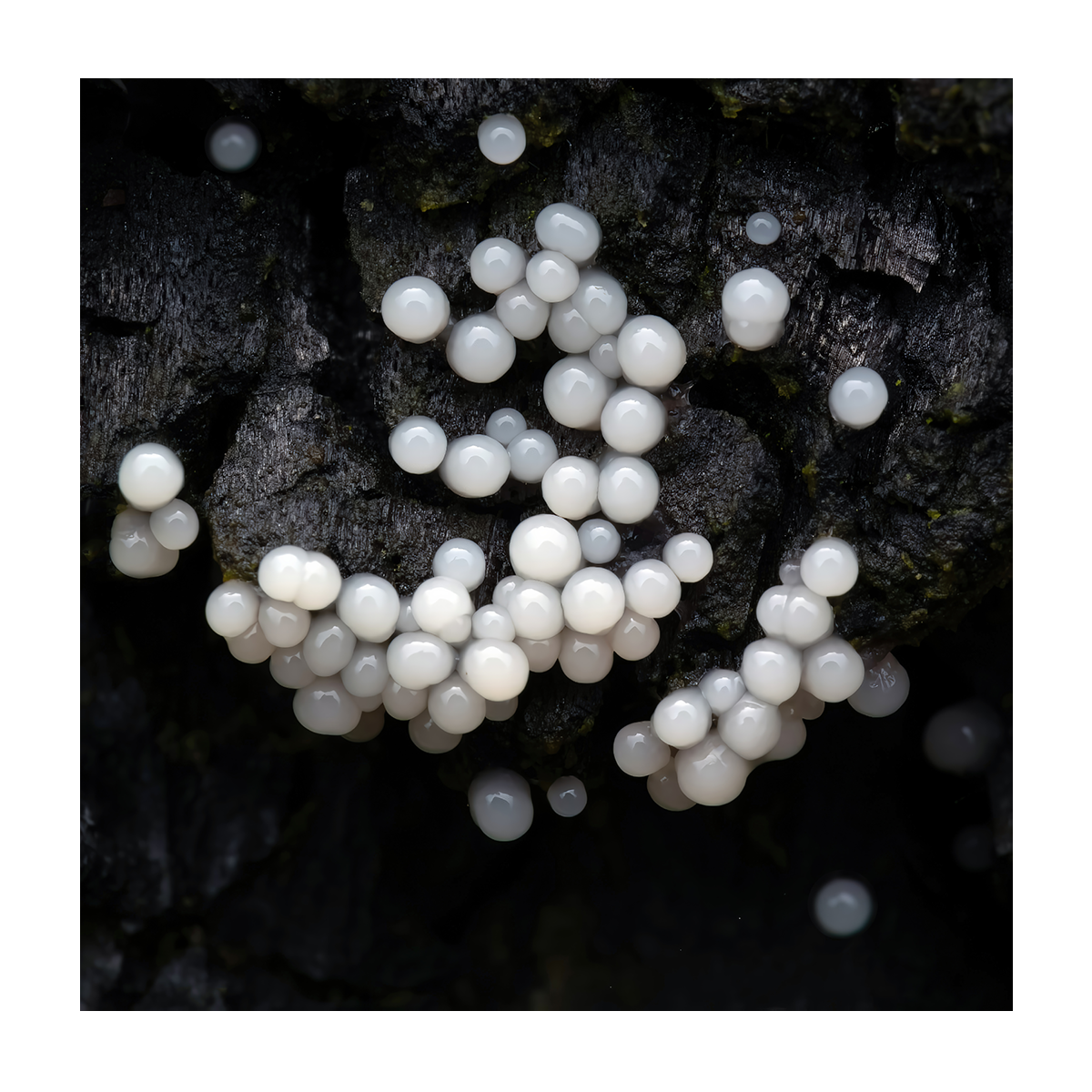
These glossy white beads are the fruiting bodies, or sporangia, of a slime mould, gathered on damp, decaying wood. Slime moulds are not fungi but amoeba-like organisms. For most of their lives they live hidden in rotting wood and leaf litter as a moving, feeding mass called a plasmodium, grazing on bacteria, yeasts and fungal spores. When food or moisture runs short, they transform into structures like these, which ripen, change colour and release spores into the air.
In the deadwood of restored colliery woodlands, slime moulds play a quiet role in the decomposer community, helping regulate the microbes that break down fallen timber.
One slime mould, Physarum polycephalum, became famous when researchers found it could solve mazes and form networks resembling the Tokyo rail system, despite having no brain.
Here, pearl-white against blackened wood, they recall a landscape where dark ground has given way to new life.