 Image 1 of 1
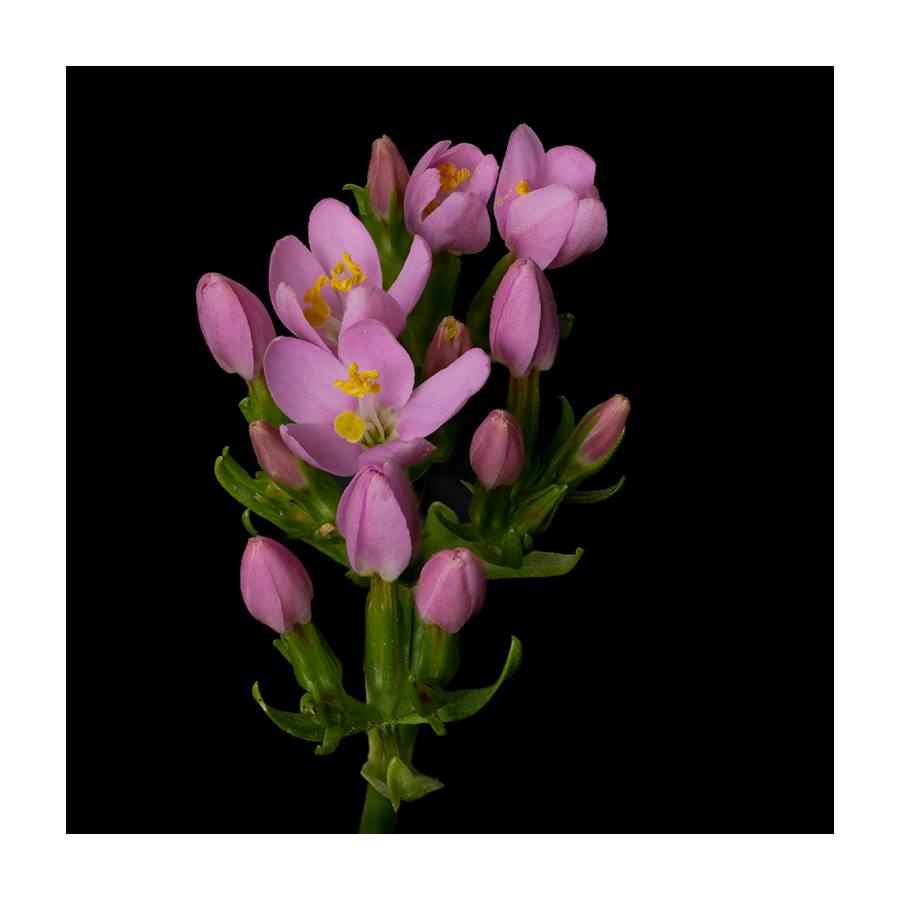
From June to September, common centaury carries flat-topped clusters of small, star-shaped pink flowers above a rosette of leaves at its base. The flowers are sensitive to the weather: they open fully only in sunshine and often close by the afternoon. They are visited by hoverflies and small bees, but can also pollinate themselves.
It is a plant of dry, open grassland, sand dunes and disturbed ground, and it readily colonises bare, low-nutrient land such as old quarries and spoil, where taller plants cannot crowd it out.
Centaury belongs to the gentian family and, like its relatives, is intensely bitter. It was once widely used as a bitter tonic to aid digestion and treat fevers, earning it the name "feverwort." Its name comes from Greek mythology: the centaur Chiron, famed for his knowledge of healing herbs, was said to have used it to treat a wound.