 Image 1 of 1
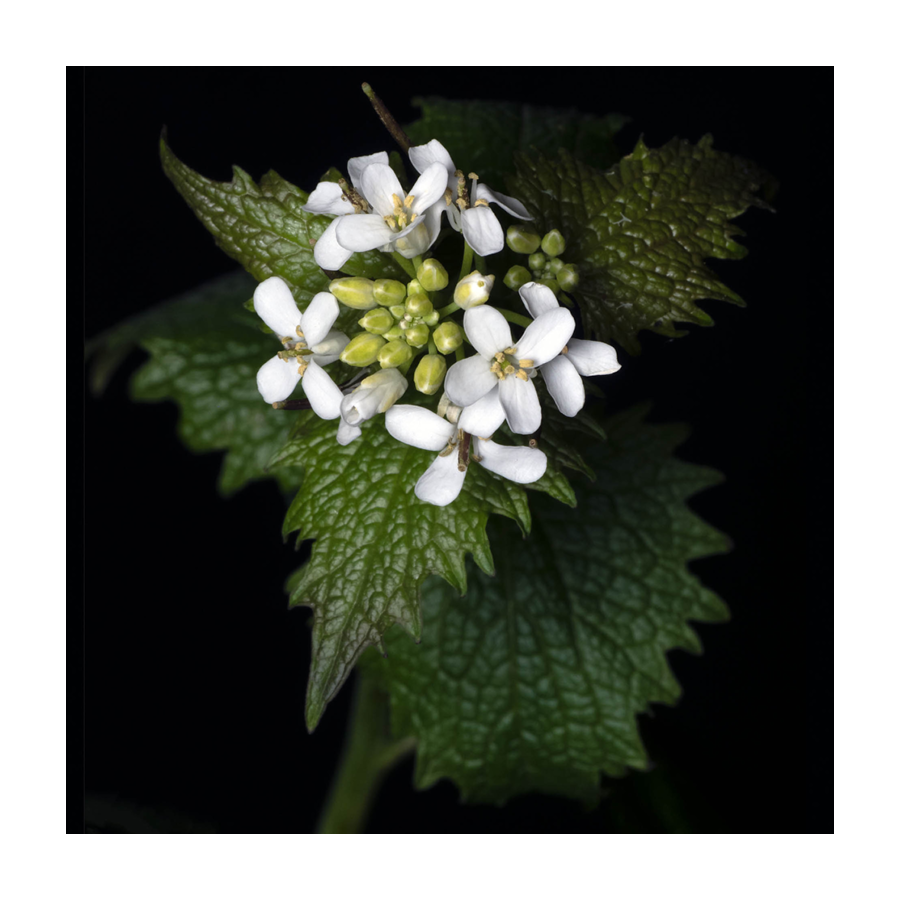
From April to June, garlic mustard carries small clusters of white flowers above heart-shaped, toothed leaves. Each flower has four petals arranged in a cross, the mark of the cabbage family to which it belongs. Crush a leaf and it gives off a mild smell of garlic, which explains its name.
It grows along hedgerows, woodland edges and shady, disturbed ground, often where the soil is rich. It is the main foodplant of the orange-tip butterfly: in spring, females lay single, tiny orange eggs on the flower stalks, and the caterpillars feed on the developing seed pods, so well camouflaged that they are hard to spot.
Garlic mustard has a long history as a food. Its leaves were eaten in salads and used as a sauce for meat, earning it the old name "sauce-alone," and traces of its seeds found in prehistoric cooking pots in northern Europe suggest people were using it to flavour food around 6,000 years ago, making it one of the oldest known spices.