 Image 1 of 1
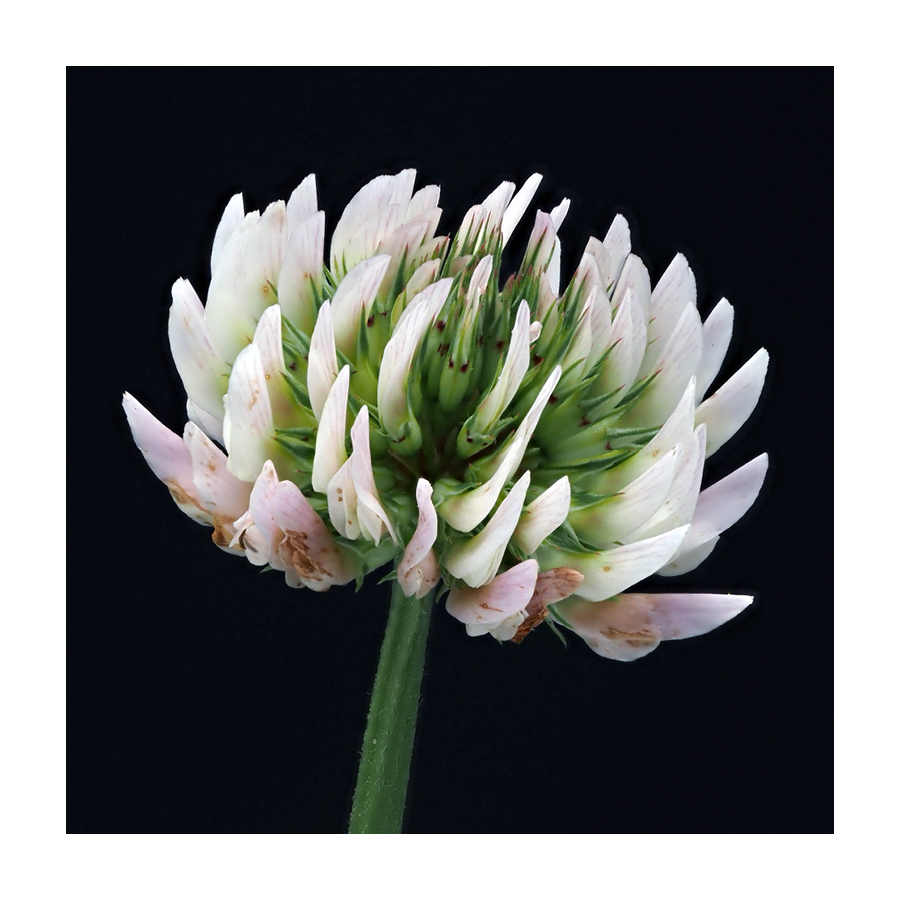
Each rounded flower head of white clover is made up of dozens of tiny pea-like florets, white or faintly pink. Look closely and you can see that the outer florets have turned brown and bent downwards. Once a floret has been pollinated, it droops out of the way, so visiting bees can tell at a glance which flowers still hold nectar.
White clover spreads by creeping stems that root as they go, forming low mats in lawns, pastures, verges and short grassland. Its leaves usually have three leaflets, often marked with a pale chevron, and the rare leaf with four is the four-leaf clover of folklore, long carried for luck. Like other members of the pea family, it hosts bacteria in its root nodules that fix nitrogen from the air, enriching the soil around it.
It has long been one of the most valuable plants for bees, and clover honey was once among the most familiar in Britain. On former colliery land, its creeping mats help bind thin soils and add nitrogen to the poor ground left by mining, while its flowers feed bees from late spring into autumn.