 Image 1 of 1
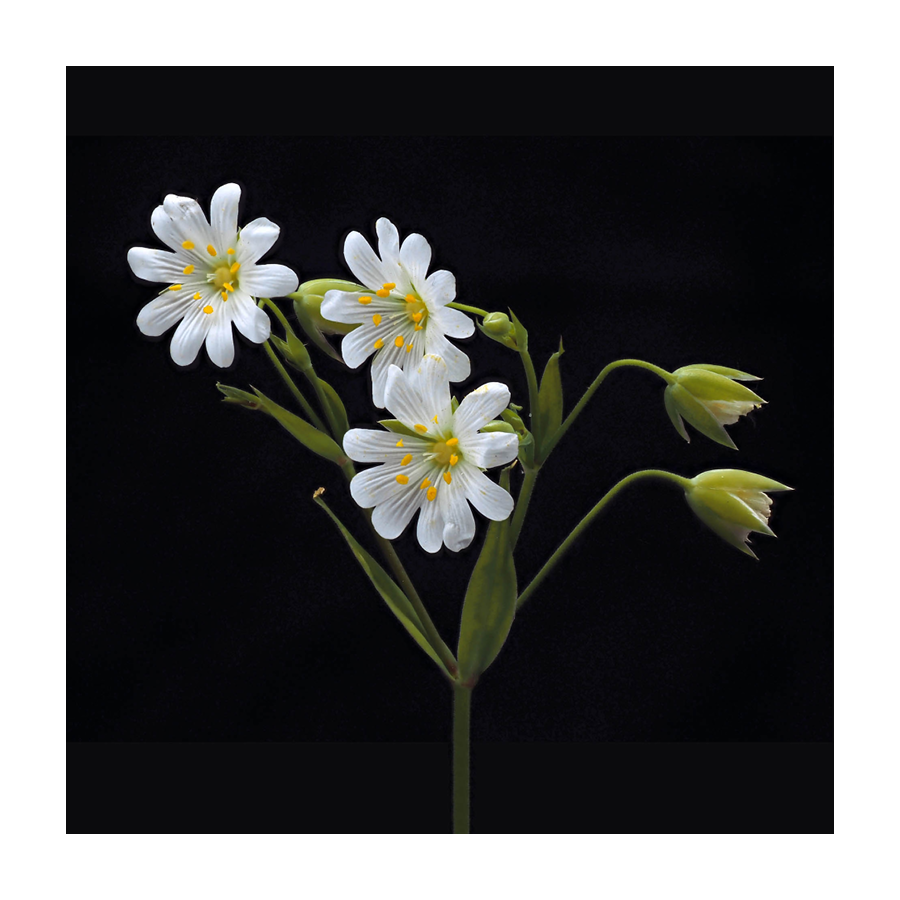
This native wildflower brightens woodland edges and hedgerows from April to June. Each flower has five white petals, split about halfway down, so it appears to have ten. Its genus name, Stellaria, comes from the Latin for "star." The square, brittle stems scramble upwards by leaning on surrounding vegetation, and the flowers are visited by bees, hoverflies and other insects for their nectar and pollen. Its common name comes from its old use as a folk remedy for a "stitch" in the side.
Picking it was once said to bring on a thunderstorm, and its seed capsules pop audibly as they ripen, earning it names such as "popguns."
On restored colliery sites, greater stitchwort often appears along hedgerows and developing woodland margins, spreading in from surviving hedges and older woodland nearby. Small white stars against dark ground, it marks the slow return of woodland flora to the old pit lands.