 Image 1 of 1
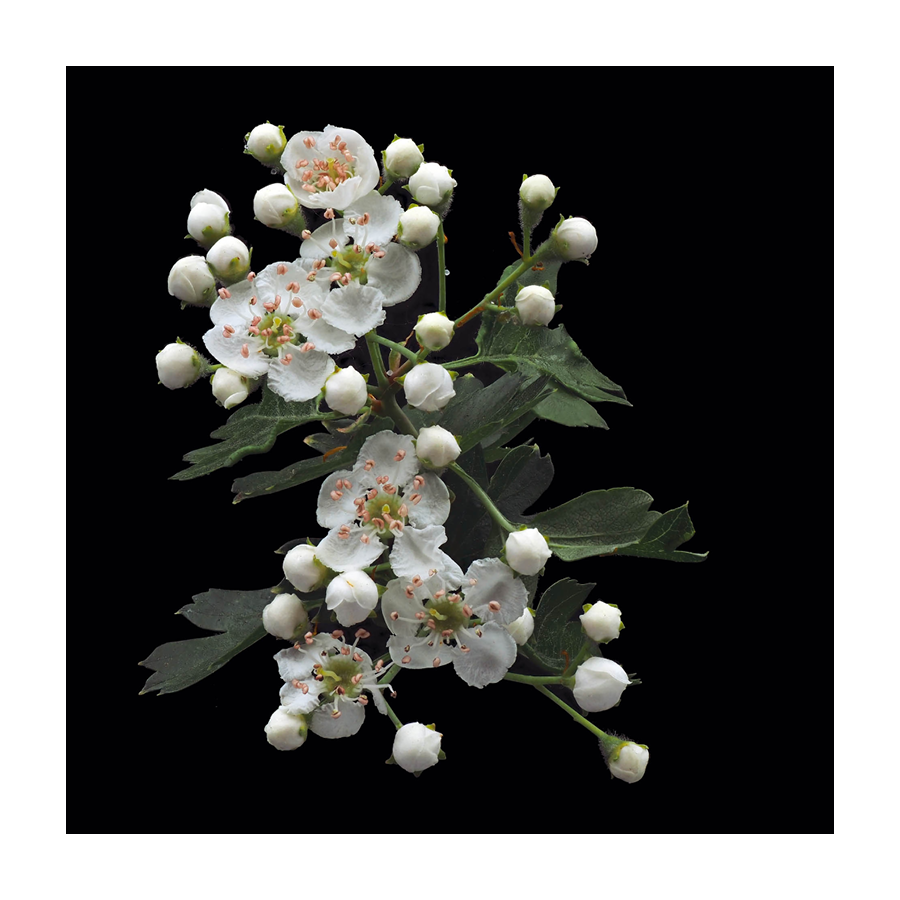
In May, hawthorn covers hedges and scrub in clusters of white blossom, each flower with five petals around a ring of pink-purple anthers. Its old name, the May tree, comes from its flowering time. In autumn the flowers become dark red berries, known as haws, which feed thrushes, blackbirds, and winter visitors such as redwings and fieldfares. Hawthorn supports more than 300 species of insects, and its thorny branches give nesting birds shelter from predators.
Hawthorn has shaped the British countryside. During the Enclosure Acts of the 18th and 19th centuries, vast numbers were planted to make stock-proof hedges, and it was known as "quickthorn," from an old word meaning living. Folklore surrounds it: it was thought unlucky to bring the blossom indoors, perhaps because its scent was said to recall death and decay, and lone hawthorns were sometimes left standing as fairy trees.
On former colliery land, hawthorn is often planted in new hedges, and birds spread its seeds onto open ground, where it grows into scrub. Over time, that scrub becomes cover and food for wildlife, and a first step towards woodland.