 Image 1 of 1
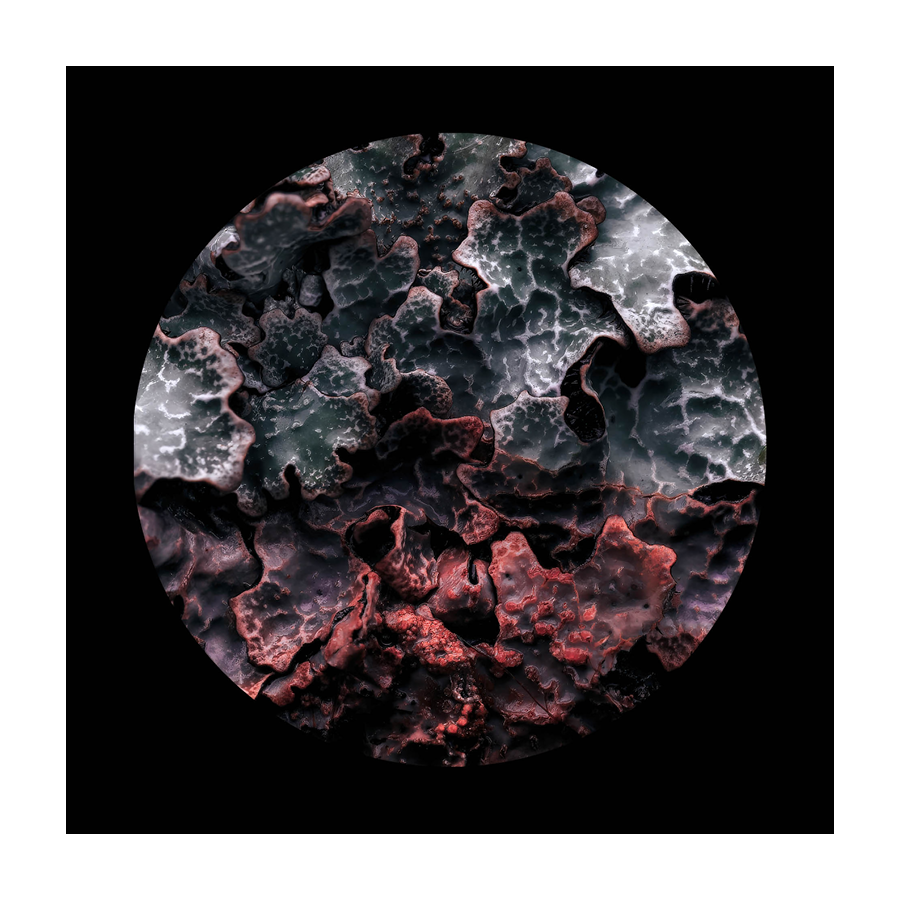
Shield lichens grow in broad, overlapping lobes, spreading outwards from the centre like a cluster of small leaves. Across their grey surface runs a fine network of white ridges and cracks. These are tiny breaks in the lichen’s outer skin, letting air reach the algae inside, and in some species they also release powdery fragments that blow away to start new lichens.
One of the most common, Parmelia saxatilis, grows on rocks and walls and has a long history as a dye. In the Scottish Highlands and islands it was known as crottle, or crotal, and was scraped from the rocks to dye wool in warm shades of brown, red-brown and gold. It was used to colour traditional tweeds, including Harris tweed.