 Image 1 of 1
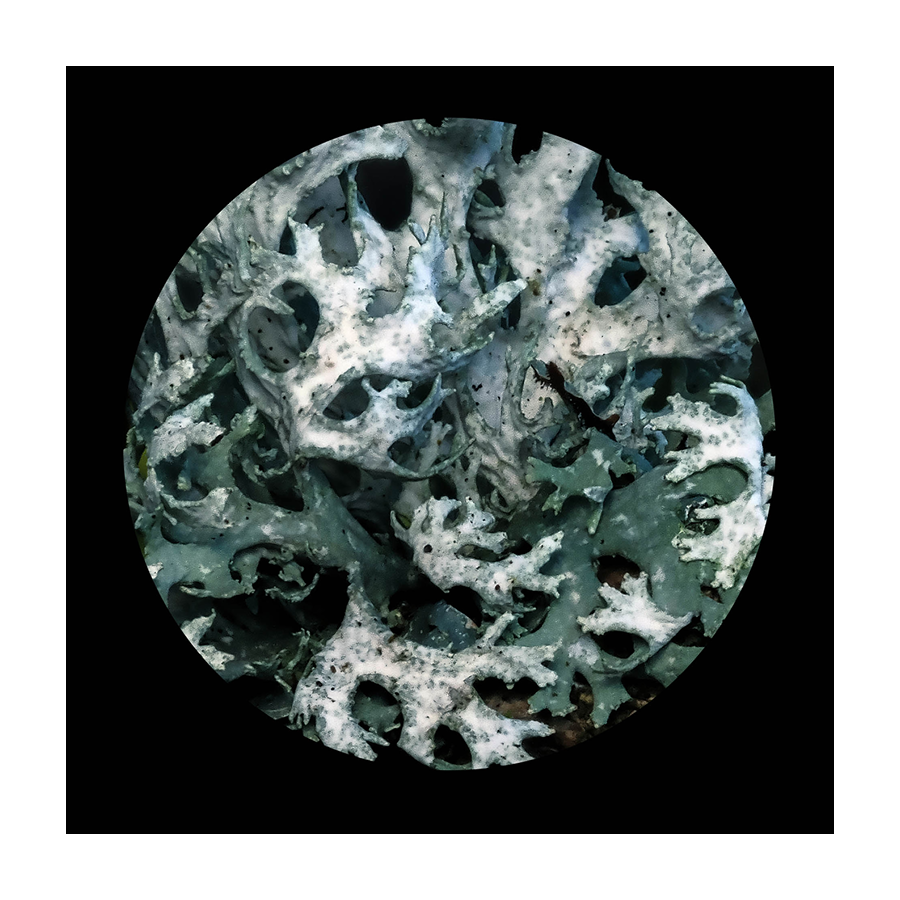
Despite its name, oakmoss is not a moss but a lichen. It grows in soft, shrubby tufts of flattened, branching straps, like tiny antlers, on the bark and twigs of trees. Each branch is grey-green on its upper side and whitish beneath, and as the straps twist and overlap, the two colours weave together into the lace-like pattern seen here. The pale, powdery patches along the edges release tiny fragments that blow away to start new lichens.
Oakmoss has a long history in perfumery. Its earthy, woody scent became a foundation of classic perfumes, especially the families known as chypre and fougère, and it has been harvested for centuries for that purpose. In recent years its use has been restricted, because some of its natural compounds can cause skin allergies.
It is also sensitive to air pollution. During the years of heavy coal burning, it disappeared from much of industrial Britain, and its return to towns and former industrial areas is one of the clearest signs of cleaner air.