 Image 1 of 1
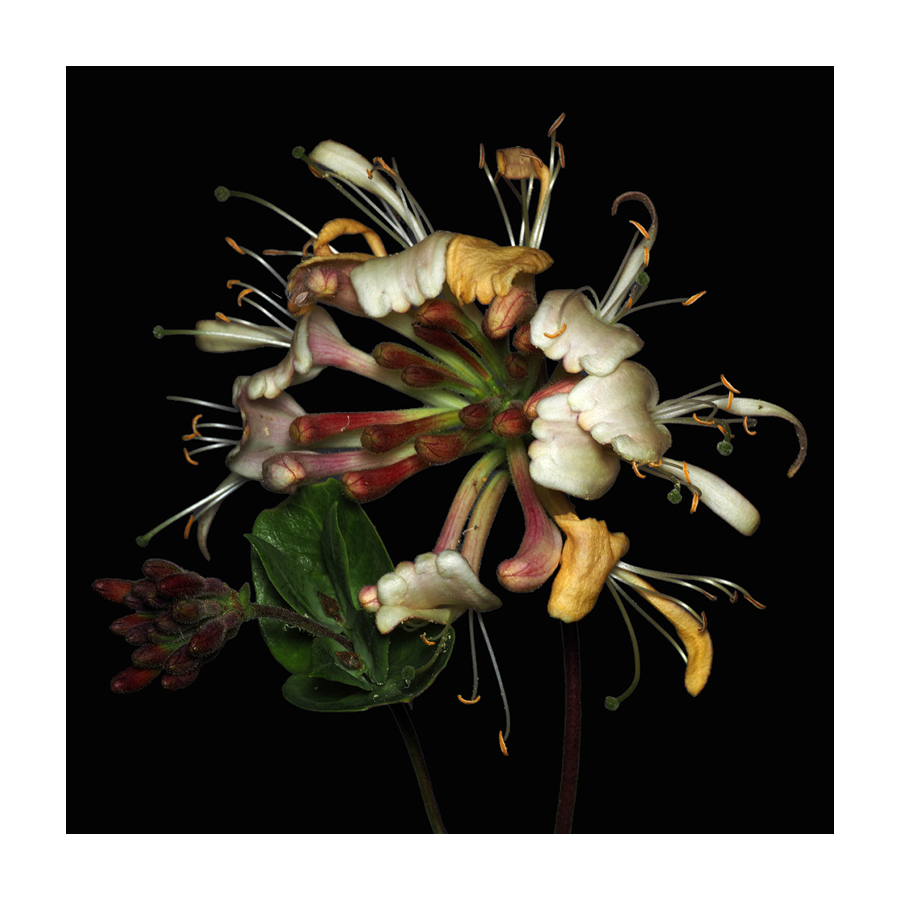
From June to September, honeysuckle opens clusters of long, tubular flowers from dark red buds. Each flower curls open into a two-lipped trumpet, with stamens arching far beyond the petals. Fresh flowers are creamy white and age to a deeper yellow, so a single cluster can show every stage at once.
Its scent is strongest at dusk and through the night, when it draws in moths. Only long-tongued insects, such as hawk-moths and some bumblebees, can reach the nectar at the base of the narrow tubes, and as they feed, they carry pollen from flower to flower. In autumn, the flowers give way to clusters of glossy red berries, eaten by birds, and in some woodlands dormice strip its papery bark to weave their nests.
Honeysuckle climbs by twining tightly around other plants, which gave it the old name woodbine. Saplings it wraps around can grow with a spiral twist, once prized for walking sticks. On former colliery land, it clambers through new hedges and young woodland, adding scent and nectar to the maturing landscape.