 Image 1 of 1
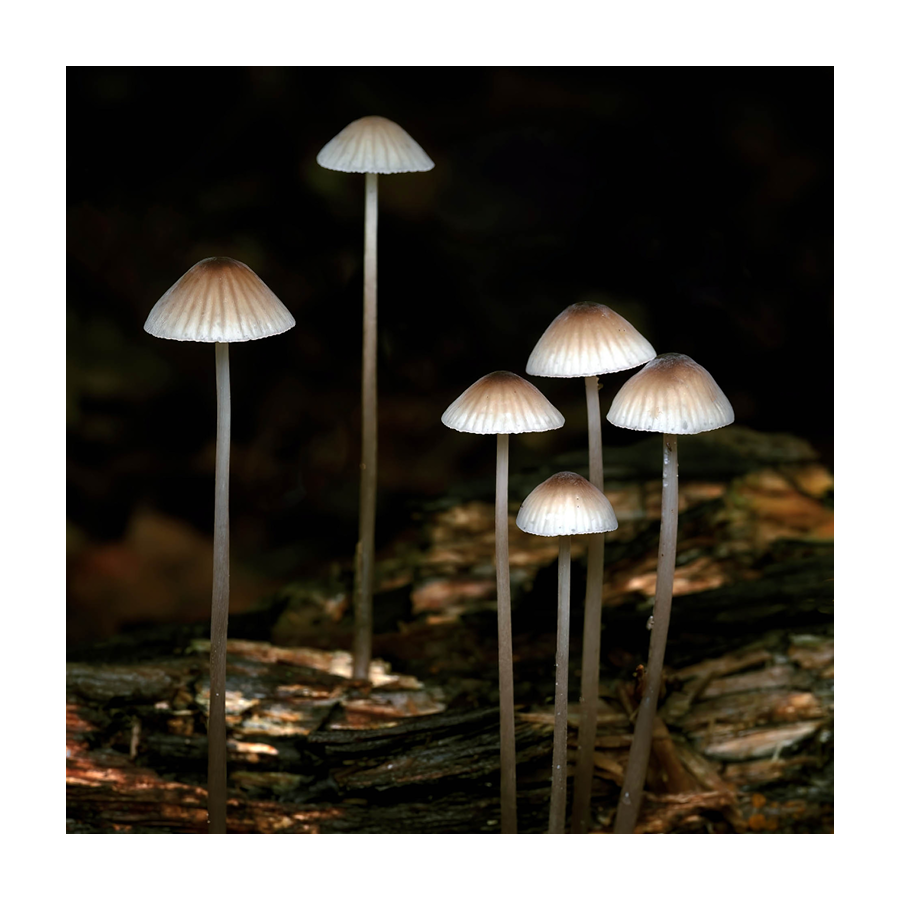
These slender mushrooms, with their bell-shaped, finely grooved caps and tall, delicate stems, belong to the bonnet genus, Mycena. It is a large group, with well over a hundred species in Britain, many of them small, grey-brown and hard to tell apart. Most are saprotrophs, feeding on dead wood, fallen leaves and needles, and helping break down the tough plant material that builds up on the woodland floor. A few species are even bioluminescent, producing a faint glow from their mycelium.
On restored colliery sites, decaying logs and stumps from maturing woodland provide food for fungi like these. As they rot the wood, they return nutrients to the soil and create the damp, crumbling habitat that insects, mosses and other organisms rely on.
Coal formed where ancient wood was buried before it could decay. Here, bonnets rising from a rotting log show the cycle running the other way, with wood returned to the living ground.