 Image 1 of 1
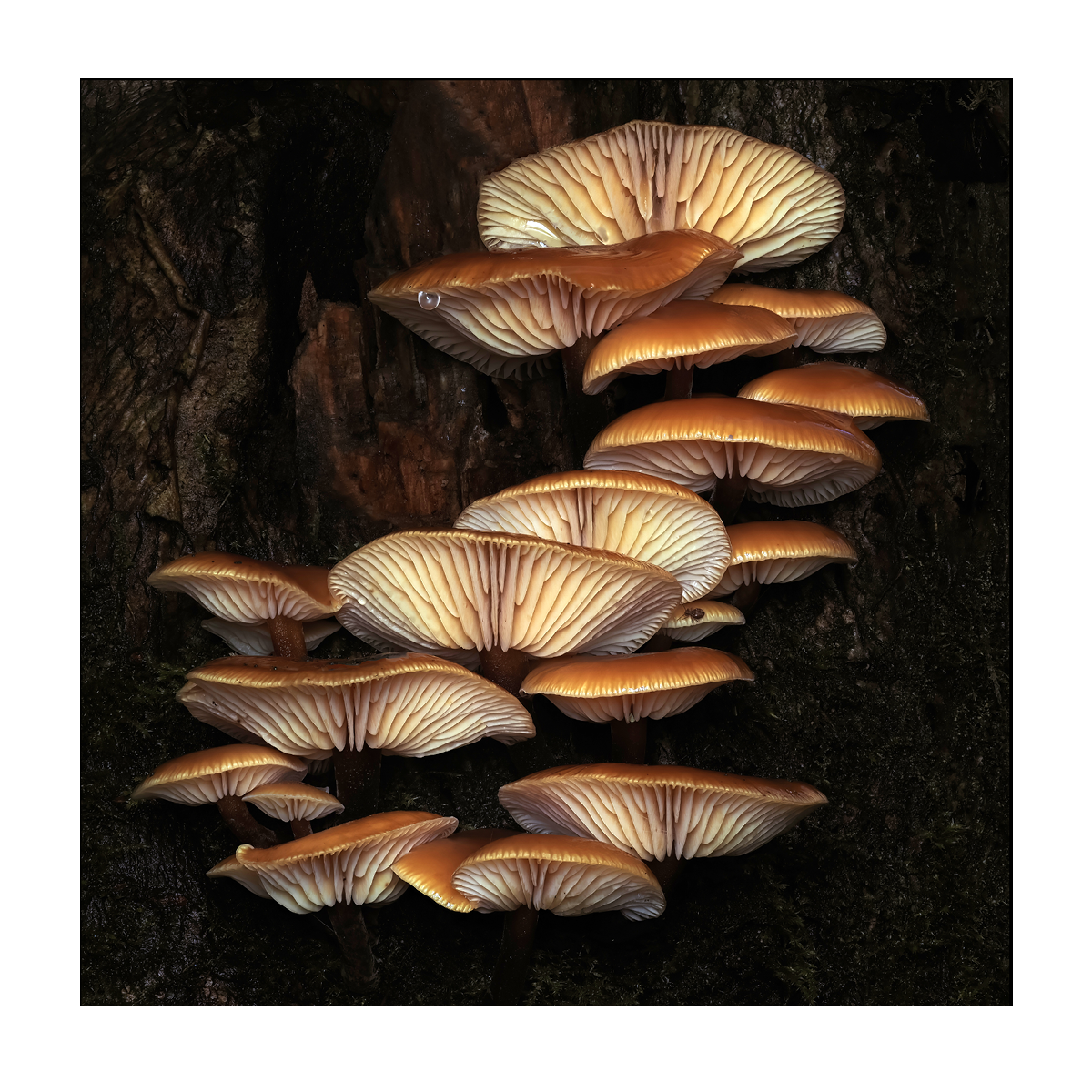
This mushroom grows in clusters on dead and dying broadleaf wood, especially willow, elm and ash. Its glossy orange-brown cap is sticky when wet, while its stem is covered in fine velvety hairs, darkening to near-black at the base. Unusually, it fruits through the coldest months, from late autumn to early spring, and can survive being frozen, resuming growth when it thaws.
On restored colliery sites, willow is often among the first trees to colonise old spoil. As these trees age and die, velvet shank helps break down their wood, including the tough lignin, returning nutrients to the soil and creating habitat for insects and other wildlife.
The pale, long-stemmed enoki mushroom sold in shops was long thought to be a cultivated form of velvet shank, grown in the dark. DNA studies published in 2018 showed that it is in fact a separate, closely related species from East Asia, Flammulina filiformis.
Coal is the remains of ancient wood that escaped decay. The velvet shank does the opposite, rotting wood back into the living landscape, bringing a flash of colour to the reserve in the depths of winter.