 Image 1 of 1
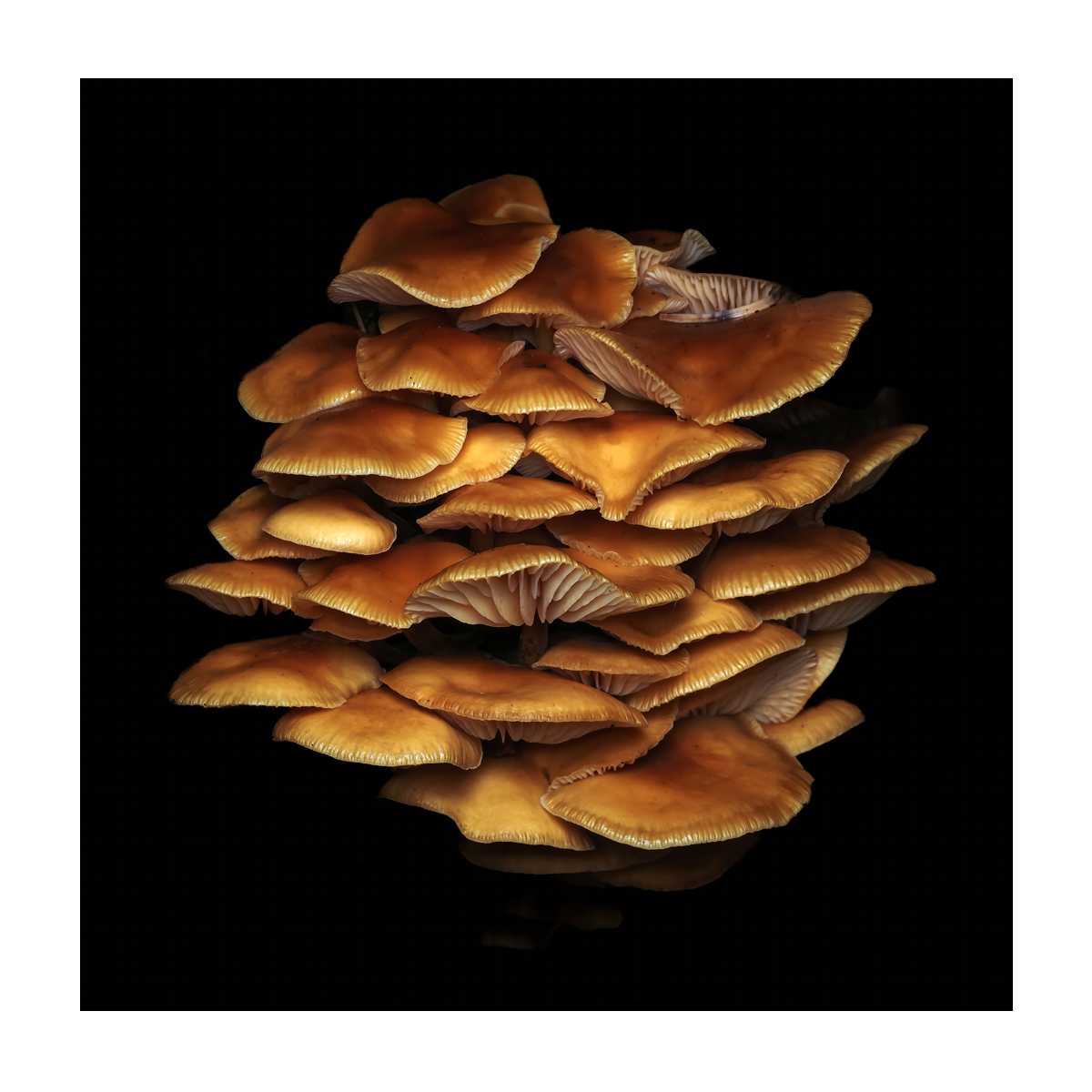
Its scientific name describes it well. Flammulina means "little flame," for the glowing orange of its caps, and velutipesmeans "velvet foot," for the dense, dark hairs that coat the lower stem. Growing in tight clusters, the caps are glossy and slightly sticky in wet weather, while the gills beneath stay pale cream to yellowish, and the stems darken from tawny near the top to almost black at the base.
Velvet shank is one of the few mushrooms that grows through winter. Frost does not stop it: a cluster can freeze solid on a January night and simply carry on growing when it thaws. When little else is fruiting, it offers food and shelter to small invertebrates such as fungus gnats and springtails.
It is often found on dead elm, and the loss of millions of elms to Dutch elm disease left plenty of the deadwood it thrives on. Although it is edible, it can be confused with the deadly funeral bell, which also grows in clusters on wood, so it should never be picked to eat without expert identification.