 Image 1 of 1
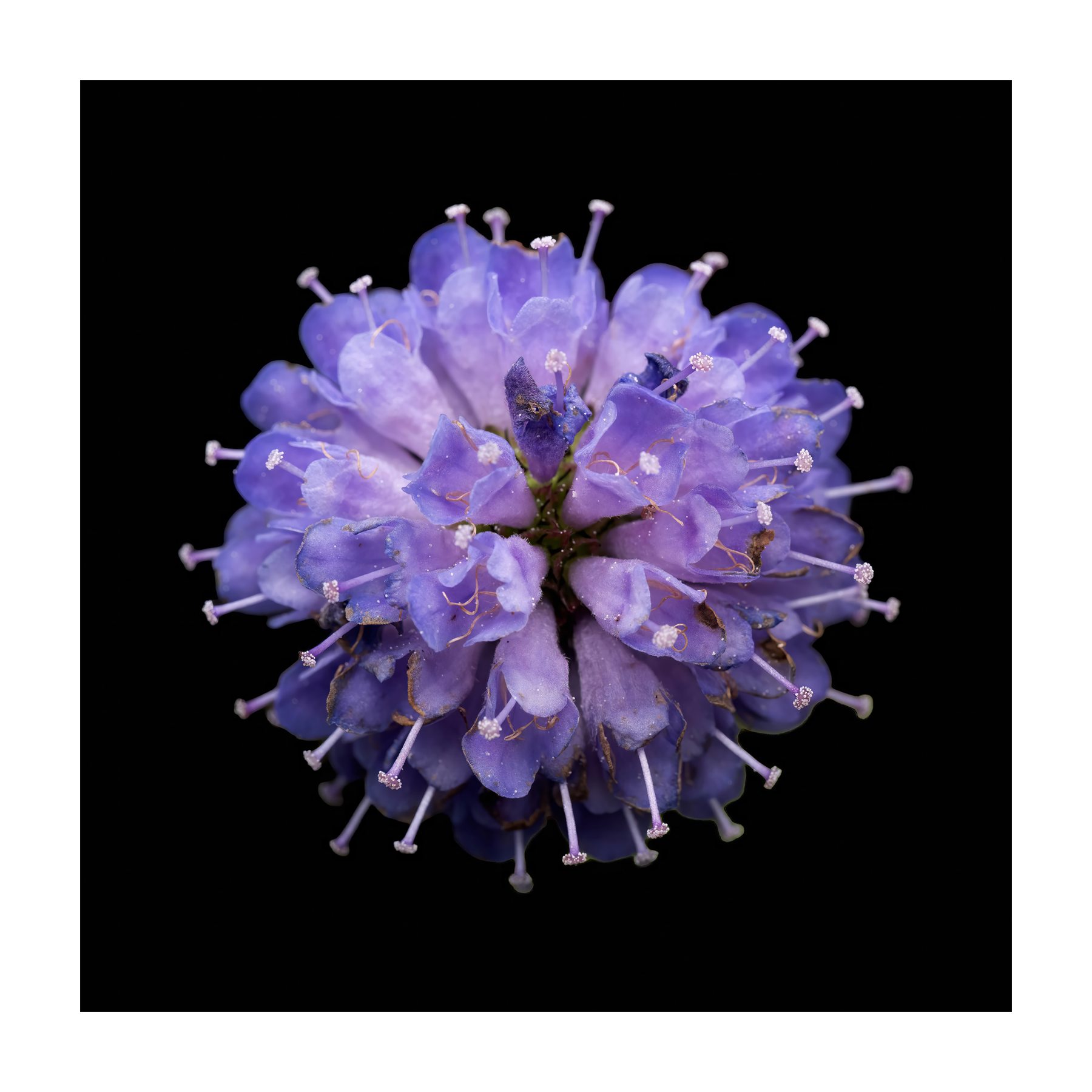
From late summer into autumn, devil's-bit scabious holds up rounded, button-like heads of blue-violet flowers on tall, slender stems. Each head is made of dozens of tiny florets, and the long stamens tipped with pale anthers give it a pincushion look. Flowering late in the year, it is an important source of nectar for bumblebees, hoverflies and butterflies as summer fades. It grows in damp meadows, marshy ground, heaths and woodland rides, usually where the soil is not too rich.
It is the main foodplant of the marsh fritillary, one of Britain's most threatened butterflies, whose caterpillars spin silk webs over its leaves.
Its name comes from its short root, which ends abruptly as if bitten off. Legend says the devil bit it off in spite, angry at the good the plant did as a medicine. Its scientific name, Succisa, means "cut off," for the same reason, while "scabious" comes from its old use in treating scabies and other skin complaints. On damper reclaimed ground, its late flowers bring a last flush of colour to the grassland before winter.