 Image 1 of 1
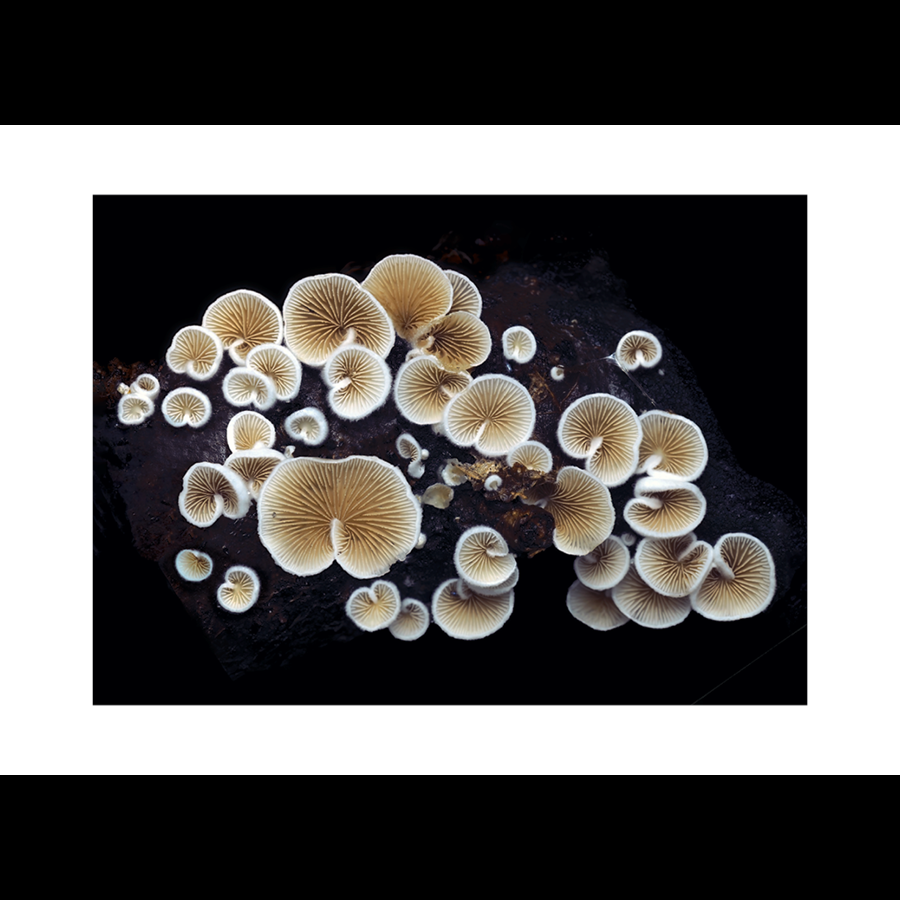
This small bracket fungus grows in tiers of fan-shaped caps, each only one to three centimetres across, on dead branches of broadleaf trees, especially birch and beech, as well as hazel and alder. From above, the caps are banded in orange-brown, fading to a pale edge. Underneath, as seen here, there are no true gills, only narrow, wavy folds that branch and crinkle like crimped fabric, which gives the fungus its name.
It is one of the first fungi to colonise fallen branches, starting the work of decay by breaking down the wood's tough lignin. After a few years, stronger decomposers such as turkeytail usually take over, continuing the process.
Once scarce in Britain, the crimped gill has spread widely in recent decades, with most British records dating from after 2000. On former colliery land, the birch that colonised bare spoil now drops its dead branches, giving this newcomer a place to grow.