 Image 1 of 1
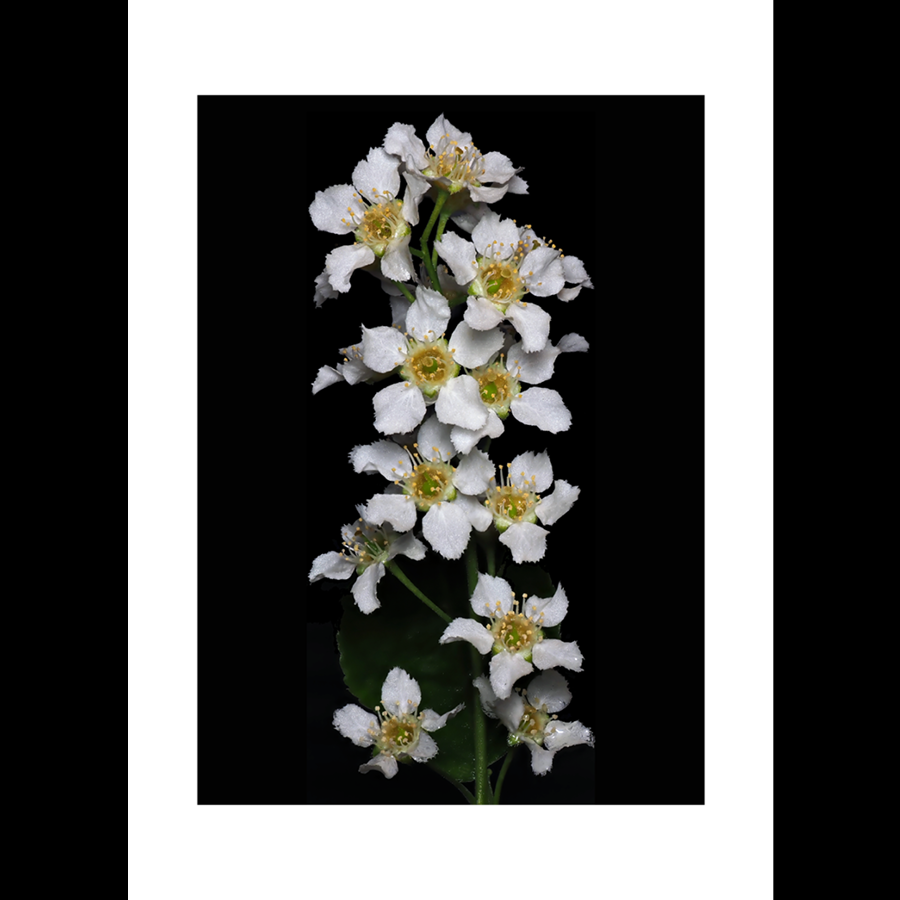
In April and May, bird cherry produces long spikes of fragrant white blossom, opening from the base upwards, visited by bees and flies. This native tree grows naturally in damp woodland and along streams, especially in northern and western Britain. Its black cherries, bitter to people, ripen in mid to late summer and are eaten by thrushes, blackbirds and other birds, which spread the seeds.
Bird cherry is also the foodplant of the bird-cherry ermine moth. In some years, its caterpillars cover entire trees in shimmering silk webs and strip them of leaves, yet the trees usually recover, growing fresh leaves later in the summer.
In northern England and Scotland, bird cherry was known as hagberry, a name probably rooted in the Old Norse word for the tree. Over time, the name became linked with the word "hag," and in north-east Scotland folk belief held that its wood was unlucky and should never be used. Its bitter fruit found a better use, steeped in whisky or brandy to make a liqueur.
On former colliery land, bird cherry adds blossom, fruit and food for insects and birds to young woodland, helping turn bare ground into a living landscape.