 Image 1 of 1
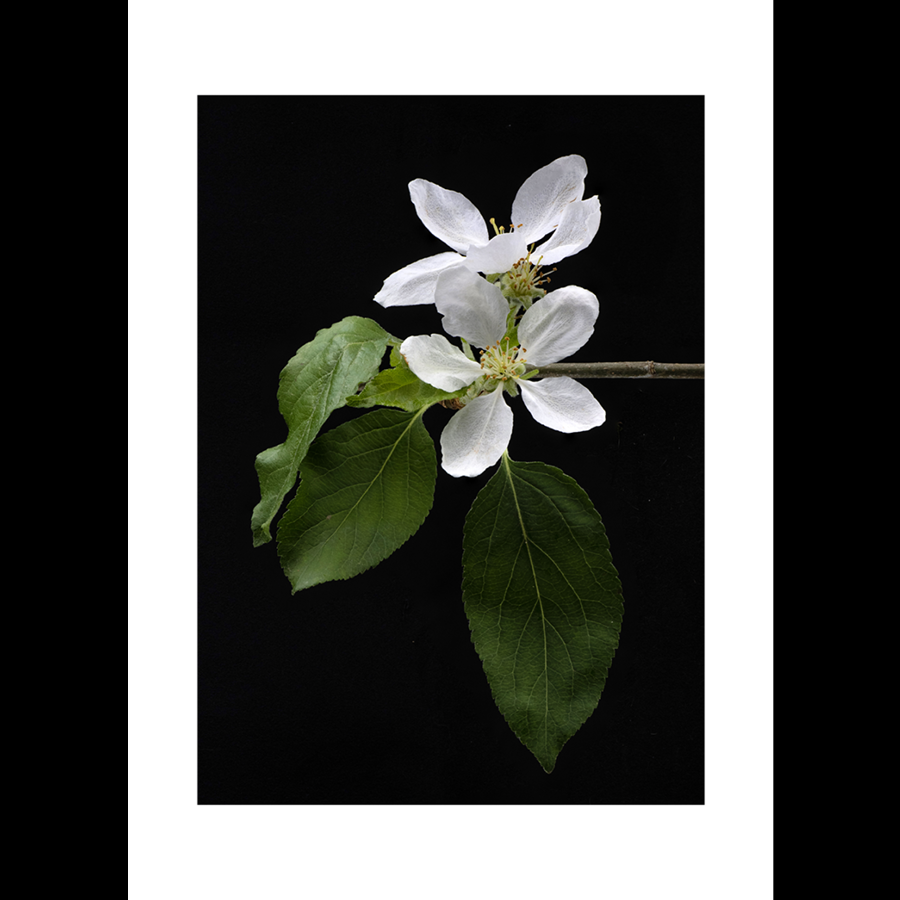
In late April and May, apple trees open clusters of white, sometimes pink-flushed flowers, each with five petals around a crown of yellow-tipped stamens. The blossom is an important early source of nectar and pollen for bees, which in turn pollinate the flowers so that fruit can form. In autumn and winter, fallen apples feed blackbirds, thrushes and winter visitors such as fieldfares and redwings.
Two kinds of apple grow wild in Britain. The native crab apple has small, sour fruit and has long been used to make jelly and verjuice, a sharp juice used in cooking. Domestic apples also grow wild, often springing up beside paths, roads and railways from discarded cores. Because apples do not grow true from seed, every one of these wildings is a new variety, unlike any apple grown before.
On former colliery land, crab apples are often planted in new woodland and hedges, while wilding apples appear along well-used paths, perhaps from cores dropped by walkers, each tree a small, unplanned addition to the landscape.
*In North East England "gowk" is dialect for an apple core.