 Image 1 of 1
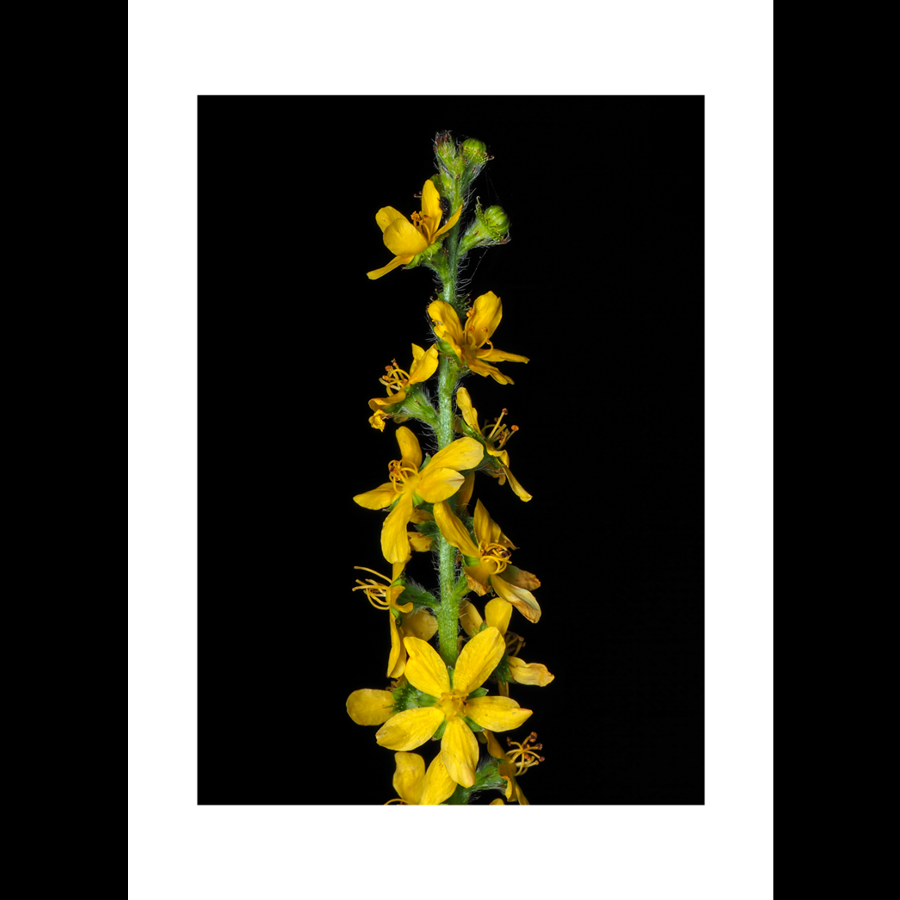
From June to August, agrimony sends up slender spikes of small yellow flowers, opening from the bottom upwards. Their tapering shape earned the plant the country name "church steeples," and the flowers give off a faint scent, often likened to apricots. They offer little nectar, but their pollen draws hoverflies and bees.
As the flowers fade, they give way to small fruits ringed with hooked bristles. These catch on passing animals and clothing, carrying the seeds far from the parent plant, which is why agrimony is also known as "sticklewort." It grows in dry grassland, on verges and along hedge banks, and the well-drained grassland on old spoil can suit it well.
Agrimony has a long history as a healing herb. It was used to treat wounds and made into a tea, and its leaves and stems were also used to make a yellow dye. Its species name, eupatoria, honours Mithridates Eupator, an ancient king of Pontus who was famed for his knowledge of plants and their uses.